Skin Infection in German Shepherd Dogs: The Complete Guide to Symptoms, Triggers, and Veterinary Solutions
PETSIDI – You are sitting on the rug brushing your German Shepherd’s dense, magnificent double coat when your hand brushes against an unsettling texture. Parting the thick guard hairs, you find raw, angry red skin, weeping pustules, and patches of missing fur. Or perhaps it is the sound keeping you awake at night: the rhythmic, relentless thump-thump-thump of a hind paw furiously scratching an armpit, paired with the pungent, sour smell of stale corn chips radiating from their belly.
Few canine sights are more heartbreaking than watching a noble, athletic working dog driven to sheer exhaustion by chronic, agonizing skin discomfort.
While German Shepherds (GSDs) are celebrated globally for their courage, physical stamina, and sharp intelligence, their immune and integumentary systems carry a well-documented genetic vulnerability. As a breed, German Shepherds are notoriously susceptible to chronic dermatological disorders. What begins as a minor seasonal scratch can escalate into widespread bacterial pyoderma, oozing hot spots, or thick, black elephant-like skin within days.
Why is a skin infection in German Shepherd dogs so prevalent? More importantly, how can pet parents identify the underlying trigger before secondary infections spiral out of control?
Here is your comprehensive, veterinarian-informed guide to understanding, treating, and preventing German Shepherd skin infections—covering clinical diagnosis, medical therapies, topical care, dietary adjustments, and home management.
Quick Reference: Common German Shepherd Skin Infections Compared
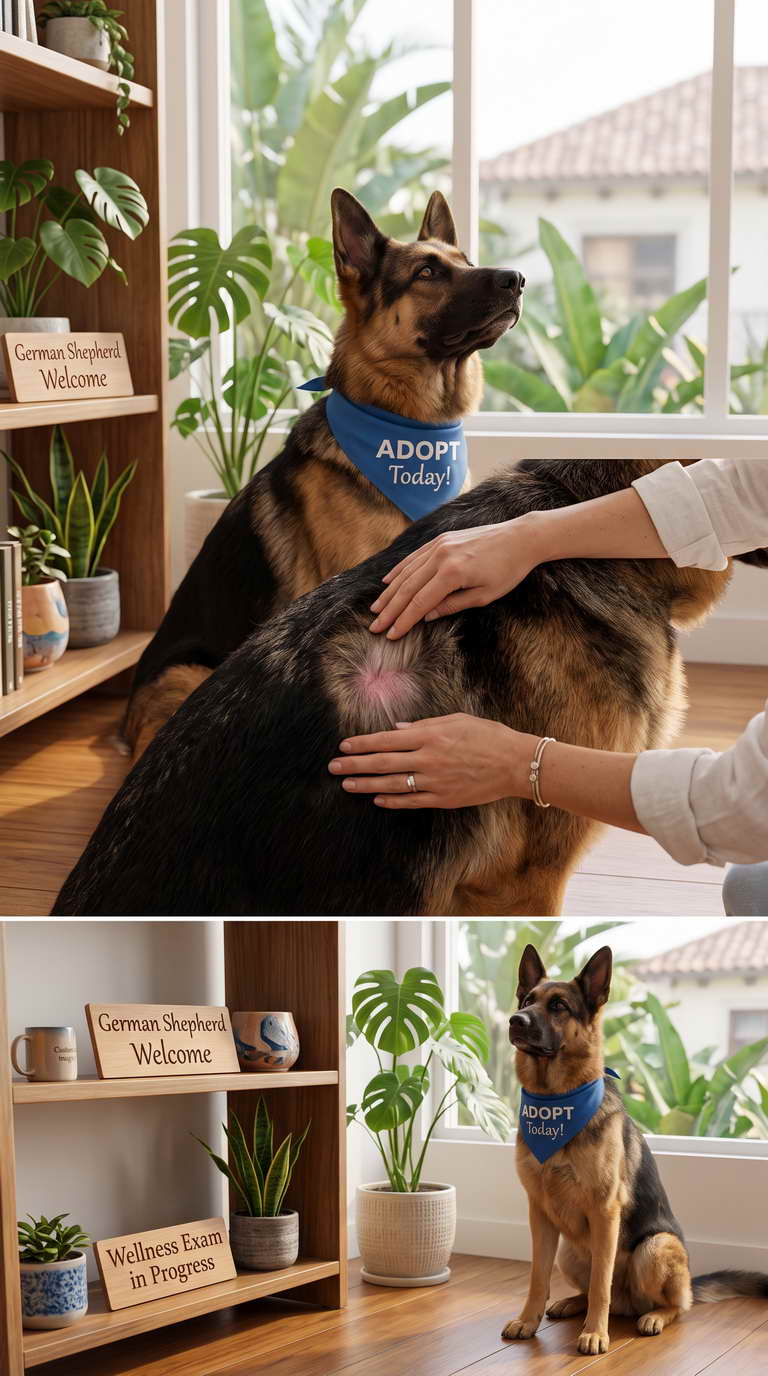
Dermatological issues in GSDs manifest in several distinct clinical forms. Use this comparison chart to recognize what your dog might be experiencing:
| Infection Type | Primary Biological Cause | Classic Visual Symptoms | Odor Profile | Typical Body Locations |
| Bacterial Pyoderma | Staphylococcus pseudintermedius | Red pimples, circular crusts (collarettes), hair loss | Mildly metallic / dirty | Groin, belly, underarms, lower back |
| Acute Moist Dermatitis (Hot Spots) | Rapid self-trauma from moisture or fleas | Bright red, raw, oozing, wet, ulcerated sores | Foul, decaying moisture smell | Neck, cheeks, base of the tail, hips |
| Malassezia Dermatitis (Yeast) | Malassezia pachydermatis overgrowth | Greasy, red or hyperpigmented (black) skin; lichenification | Pungent sour beer / corn chip odor | Paws, ears, groin folds, armpits |
| Flea Allergy Dermatitis (FAD) | Hypersensitivity to flea saliva enzymes | Intense biting, crusty papules, severe patch alopecia | General dirty skin odor | Base of tail, inner thighs, lower back |
| Mucocutaneous Pyoderma | Specialized bacterial variant | Crusting, erosion, ulceration, pigment loss | Minimal to mild | Lips, nose leather, eyelids, vulva/prepuce |
The Biological Vulnerability: Why German Shepherds Suffer More
Why do German Shepherds experience significantly higher rates of dermatological flare-ups than many other working dogs? The answer lies in a convergence of genetics, coat architecture, and immune dynamics.
                  ┌───────────────────────────────────────────────┐
                  │       The GSD Skin Vulnerability Triad        │
                  └───────────────────────┬───────────────────────┘
                                          │
         ┌────────────────────────────────┼────────────────────────────────┐
         ▼                                ▼                                ▼
┌───────────────────────────┐ ┌───────────────────────────┐ ┌───────────────────────────┐
│     Dense Double Coat     │ │     Atopic Genetic Wiring │ │       Low Mucosal IgA       │
│ • Traps outdoor moisture  │ │ • Hyper-reactive immune   │ │ • Reduced protective local  │
│ • Hinders airflow to skin │ │   response to pollens     │ │   antibodies on the skin    │
│ • Incubator for bacteria  │ │ • Inherited skin barrier  │ │ • Invites rapid bacterial   │
│   and fungal micro-spores │ │   structural micro-defects│ │   colonization & infection  │
└───────────────────────────┘ └───────────────────────────┘ └───────────────────────────┘
-
The Double Coat Moisture Trap: The German Shepherd possesses a weather-resistant outer coat and a dense, insulating undercoat. When a GSD swims, gets caught in rain, or undergoes a bath without being dried down to the skin, dampness remains trapped against the epidermis for hours. In warm weather, this warm moisture creates a biological incubator for opportunistic pathogens.
-
Genetically Mediated Low Secretory IgA: Clinical research indicates that many German Shepherd bloodlines exhibit naturally lower levels of Secretory Immunoglobulin A (sIgA)—an essential antibody class responsible for protecting mucous membranes and skin surfaces. Without sufficient local antibody defense, harmless resident microbes multiply uncontrollably.
-
High Incidence of Canine Atopic Dermatitis (CAD): German Shepherds are genetically predisposed to environmental allergies. When microscopic pollen, dust mites, or mold spores penetrate their compromised epidermal lipid barrier, their immune system triggers intense itching (pruritus). The physical biting and scratching that follows causes mechanical micro-abrasions, opening the door for bacteria to invade.
3 Major Types of German Shepherd Skin Infections Explained

Skin infections are almost always secondary invaders capitalizing on underlying inflammation. Here are the three primary culprits:
1. Bacterial Pyoderma (Superficial & Deep)
Healthy canine skin naturally hosts billions of Staphylococcus pseudintermedius bacteria kept in check by the immune system.
-
Superficial Pyoderma: When the epidermal barrier cracks, these bacteria invade hair follicles, forming red bumps (papules) and small pustules that look remarkably like human acne. As pustules burst, they leave expanding circular rings of peeling crusts known as epidermal collarettes.
-
Deep Pyoderma (German Shepherd Pyoderma Syndrome): A severe, hereditary manifestation unique to the breed. Infection penetrates deep into the dermis and subcutaneous fat, creating painful draining tracts, bloody furuncles, and swelling along the thighs and flanks. This systemic condition requires intensive veterinary care.
2. Acute Moist Dermatitis (“Hot Spots”)
Hot spots are the fastest-developing skin conditions in the canine world. A German Shepherd can have normal skin at 8:00 AM, and by 2:00 PM, display a weeping, hairless, bloody wound the size of a saucer.
-
The Cycle: An initial localized irritation (such as an ear infection, flea bite, or trapped pond water) triggers intense chewing.
-
The Explosion: The dog’s rough tongue strips away the top epithelial layer. Resident bacteria flood the open wound, releasing inflammatory enzymes that cause excruciating pain. The dog continues chewing furiously to numb the irritation, rapidly expanding the wound.
3. Malassezia (Yeast) Dermatitis
Malassezia pachydermatis is a budding yeast that lives symbiotically on canine skin. However, when skin becomes excessively oily (seborrhea) or moist from sweat and humidity, yeast populations explode.
-
Clinical Presentation: The skin turns bright pink or angry red, accompanied by a thick, greasy brown discharge. Over months of chronic infection, the skin thickens, develops deep folds, and turns dark charcoal gray or black (hyperpigmentation and lichenification).
-
Ear Involvement: Yeast dermatitis rarely stays confined to the body; it almost universally spreads to the ear canals. Proactively mastering how to clean dog ears naturally at home with gentle, balanced drying rinses helps keep fungal colonies from establishing deep footholds in heavy ear leather.
The Diagnostic Pathway: What to Expect at the Vet
Treating skin conditions by guessing or buying random over-the-counter sprays often wastes money while allowing infections to spread. A professional diagnosis follows an orderly medical pathway:
Diagnostic Pathway:
[Skin Cytology Tape Prep] ──► [Skin Scraping for Mites] ──► [Bacterial Culture & Sensitivity] ──► [Allergy Workup]
-
Skin Cytology (The Gold Standard): The veterinarian presses a clear piece of tape or a glass slide against the red lesion, stains it, and examines it under a microscope. This reveals within ten minutes whether the invader is cocci bacteria, rod bacteria, or budding yeast organisms.
-
Deep Skin Scraping: Essential for ruling out microscopic Demodex or Sarcoptes mange mites, which burrow into hair follicles and cause identical hair loss patterns.
-
Bacterial Culture & Sensitivity: If an infection fails to respond to standard antibiotics, a culture swab isolates the exact strain and identifies which medications will eliminate it, guarding against antibiotic resistance.
-
Food Trial / Elimination Diet: If flare-ups happen continuously year-round, an eight-week strict hypoallergenic diet trial determines if underlying food proteins are breaking down the skin barrier.
The American Veterinary Medical Association (AVMA) emphasizes that cytology is non-negotiable before initiating therapy, as treating a fungal yeast overgrowth with antibacterial drugs will eliminate competing bacteria and make the yeast explosion far worse.
Modern Medical Treatments: Breaking the Itch-Scratch Cycle
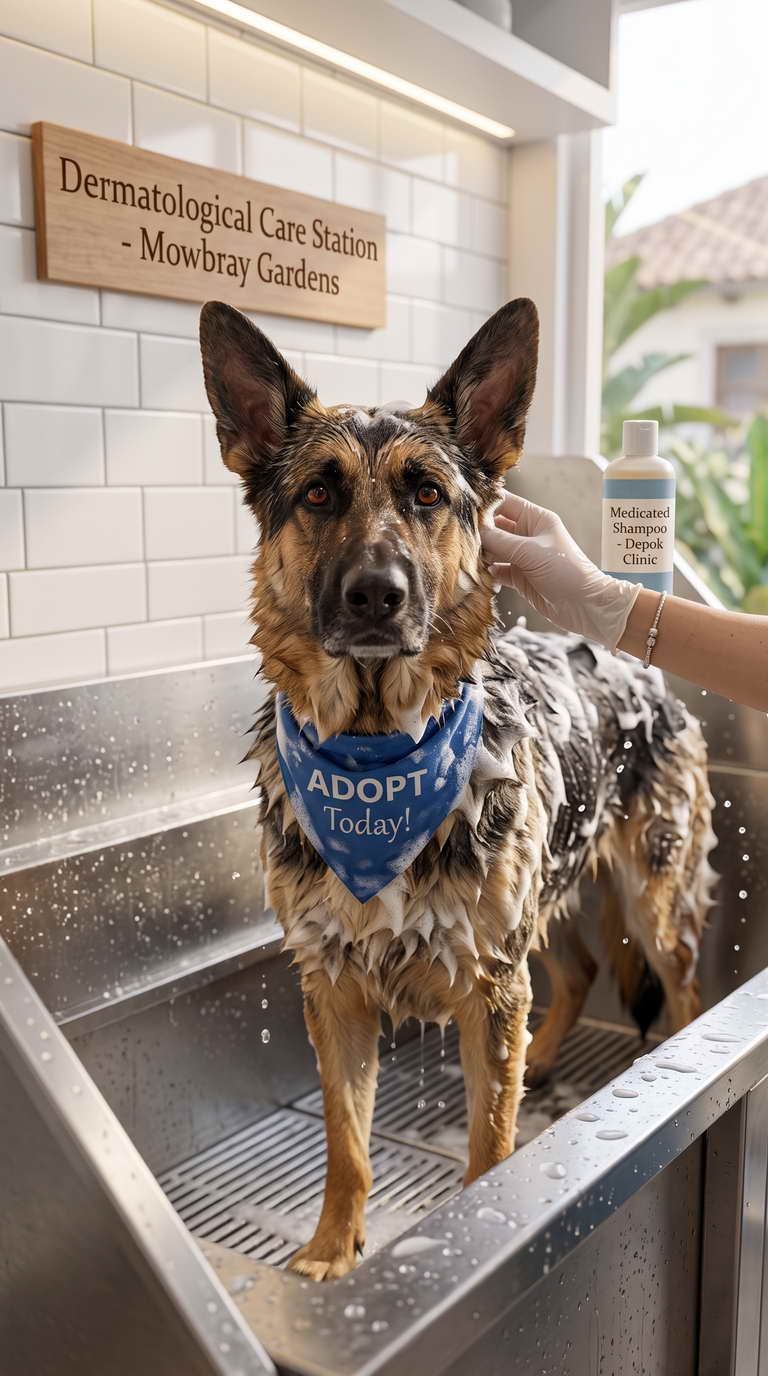
Effective treatment requires a dual-pronged approach: eliminating the active microbiological infection while shutting down the inflammatory itch reflex.
1. Systemic and Topical Antimicrobial Therapy
-
Targeted Antibiotics: For bacterial pyoderma, first-generation cephalosporins (Cephalexin) or potentiated amoxicillin (Clavamox) are traditionally prescribed for 21 to 28 days—continuing for a full week past the complete visual clearing of the skin.
-
Antifungals: For yeast infections, systemic oral antifungals like Ketoconazole or Fluconazole are paired with topical treatments.
-
Medicated Shampoos: The cornerstone of recovery. Shampoos combining 2% to 4% Chlorhexidine (antibacterial) and 1% to 2% Ketoconazole (antifungal) disrupt microbial biofilms directly on the skin. Bathing the dog two to three times weekly, allowing the suds to soak into the skin for ten full minutes before rinsing, dramatically speeds healing.
2. Targeted Anti-Itch Interventions
Killing the bacteria takes time, but your dog needs relief immediately. Modern veterinary medicine offers targeted therapies that avoid the severe side effects of systemic steroids:
-
Apoquel (Oclacitinib): A daily oral tablet that selectively inhibits the Janus kinase (JAK-1) enzyme pathway, shutting down the nerve signals that transmit the sensation of itching within four hours.
-
Cytopoint (Lokivetmab): A monoclonal antibody injection administered every 4 to 8 weeks. It mimics natural canine antibodies, neutralizing Interleukin-31 (IL-31)—the primary cytokine responsible for signaling itchiness to the canine brain.
Nutritional Foundations: Rebuilding the Epidermal Barrier from Within
Topical washes soothe the surface, but a durable, resilient skin barrier is manufactured from internal nutrition.
       ┌──────────────────────────────────────────────────────────────┐
       │             Nutritional Skin Support Pillars                 │
       └──────────────────────────────┬───────────────────────────────┘
                                      │
         ┌────────────────────────────┴────────────────────────────┐
         ▼                                                         ▼
┌─────────────────────────────────┐       ┌─────────────────────────────────┐
│     Omega-3 Fatty Acids (EPA/DHA│       │     Intact Skin Lipids          │
│ • Sourced from wild anchovy or  │       │ • High-quality animal proteins  │
│   sardine marine oils           │       │ • Chelated zinc & biotin fuel   │
│ • Natural anti-inflammatory     │       │   follicular keratinization     │
│ • Replaces pro-inflammatory     │       │ • Balanced vitamin E supports   │
│   arachidonic acid in cell walls│       │   cellular membrane defense     │
└─────────────────────────────────┘       └─────────────────────────────────┘
Because large working canines burn substantial metabolic fuel, feeding a cheap, starch-laden commercial diet packed with generic meat meals can lead to nutritional deficiencies that show up first in the coat. Selecting high-grade diets detailed across our buyer’s guide to premium pet food brands guarantees adequate levels of bioavailable zinc, linoleic acid, and marine-derived Omega-3s.
As one of the most athletic and muscular working breeds highlighted on our overview of the most popular large dog breeds, German Shepherds require specialized nutritional care to sustain immune defense alongside their substantial muscular framework.
Safe Home Support and Everyday Prevention Protocols
Medical treatments resolve active infections, but consistent daily habits prevent future relapses:
1. The High-Velocity Blow Dryer Rule
Never allow a German Shepherd with a history of skin infections to “air dry” after swimming in lakes, romping through wet grass, or taking a bath.
-
Invest in a professional high-velocity pet dryer.
-
High-velocity air separates the thick guard hairs, drives trapped moisture off the skin, and blows away trapped debris and dander that fuel bacterial overgrowth.
2. Immediate Hot Spot First Aid
If you discover a fresh hot spot beginning to weep at home before your vet appointment opens:
-
Clip the Fur: Use electric clippers to shave the hair 1 to 2 inches around the red lesion. Air circulation is essential to halt bacterial replication.
-
Cleanse Gently: Flush the area with cool sterile saline or dilute chlorhexidine solution. Pat dry with sterile gauze.
-
Prevent Self-Trauma: Put an Elizabethan collar (the cone of shame) on your dog immediately. Ten seconds of licking will erase three days of healing.
-
Never Apply Thick Ointments: Avoid smearing petroleum jelly, coconut oil, or antibiotic pastes on fresh hot spots. Heavy ointments trap moisture, seal in anaerobic bacteria, and accelerate tissue decay.
According to health guidelines published by the American Kennel Club (AKC), comprehensive flea and tick prevention administered year-round is vital for German Shepherds, as a single flea bite can trigger widespread allergic dermatitis across the entire rear body.
Frequently Asked Questions (FAQ)
Can I use human anti-itch creams or hydrocortisone on my German Shepherd?
Use caution. While a tiny dab of 0.5% hydrocortisone cream is safe on unbroken skin temporarily, dogs will instinctively lick topicals off. Ingesting synthetic topical steroids can cause gastrointestinal ulcers, vomiting, and endocrine disruption. Stick to veterinarian-approved sprays containing bitter deterrents.
Why do my German Shepherd’s paws smell like corn chips?
That classic “Frito feet” smell is produced by volatile organic compounds released by natural colonies of Pseudomonas or Proteus bacteria, along with Malassezia yeast living between paw pads. If the smell becomes overpowering, or if your dog licks their paws until the fur stains rusty red, an active yeast infection is present.
How long does it take for a German Shepherd skin infection to heal?
Superficial bacterial infections and localized hot spots generally clear within 10 to 14 days of proper topical and antimicrobial care. However, deep German Shepherd pyoderma or chronic yeast dermatitis with thickened skin may require 6 to 12 weeks of continuous medicated bathing and systemic therapy to fully resolve.
Can home remedies like apple cider vinegar cure a bacterial skin infection?
Dilute apple cider vinegar (a 50/50 mix with water) possesses mild natural antifungal properties and can serve as a helpful preventative rinse for healthy skin. However, once an active bacterial infection with open sores, pustules, or oozing hot spots is established, vinegar will cause severe chemical stinging and pain without penetrating deep enough into hair follicles to eradicate the infection.
Final Thoughts: Restoring Comfort and Dignity
A skin infection in German Shepherd dogs is rarely just a cosmetic inconvenience; it is a profound quality-of-life issue that tests the patience and resilience of any household.
Watching an alert, noble protector struggle with constant itching and painful lesions is stressful, but chronic skin disease is entirely manageable. Success requires looking past superficial fixes: working with your veterinarian to identify whether bacteria, yeast, or environmental allergies are the root cause, utilizing medicated bathing protocols, and fortifying the skin barrier with quality nutrition.
With consistent management, attentive grooming after outdoor adventures, and early intervention at the first sign of redness, you can break the frustrating cycle of flare-ups—restoring your German Shepherd’s dense, shiny coat and giving them the comfortable, itch-free life they deserve.
About The Author

Leave a Reply