Dog Keeps Licking Paw? Causes, Warning Signs, and How to Stop the Itch
PETSIDI – It starts as a quiet, repetitive sound in the corner of the bedroom late at night: slurp… slurp… lick… nibble.
You ask your dog to stop, they look up guiltily for a few seconds, wait until you close your eyes, and immediately return to furiously gnawing at their front paw. When you gently inspect the foot, you notice the fur between the toes has stained an unsightly rust-red color, the skin looks inflamed, and a damp, sour odor—reminiscent of stale corn chips—radiates from the paw pad.
While occasional, casual grooming after a muddy outdoor walk is completely normal canine behavior, a dog keeps licking paw pads constantly is signaling distress.
Canines do not lick their paws raw out of habit or boredom alone. Their feet are sensitive sensory hubs packed with nerve endings, sweat glands, and delicate interdigital webbing. When a dog licks and bites one or more paws obsessively, they are attempting to numb physical discomfort, relieve an allergic itch, soothe joint inflammation, or cope with psychological anxiety.
Why is your companion targeting their feet? How can you tell whether the culprit is a microscopic parasite, a hidden yard splinter, a seasonal grass pollen allergy, or an aching arthritic knuckle?
Here is your comprehensive, veterinarian-informed guide to understanding, diagnosing, and resolving chronic paw licking in dogs—covering physical inspection protocols, common clinical triggers, medical treatments, and safe home remedies.
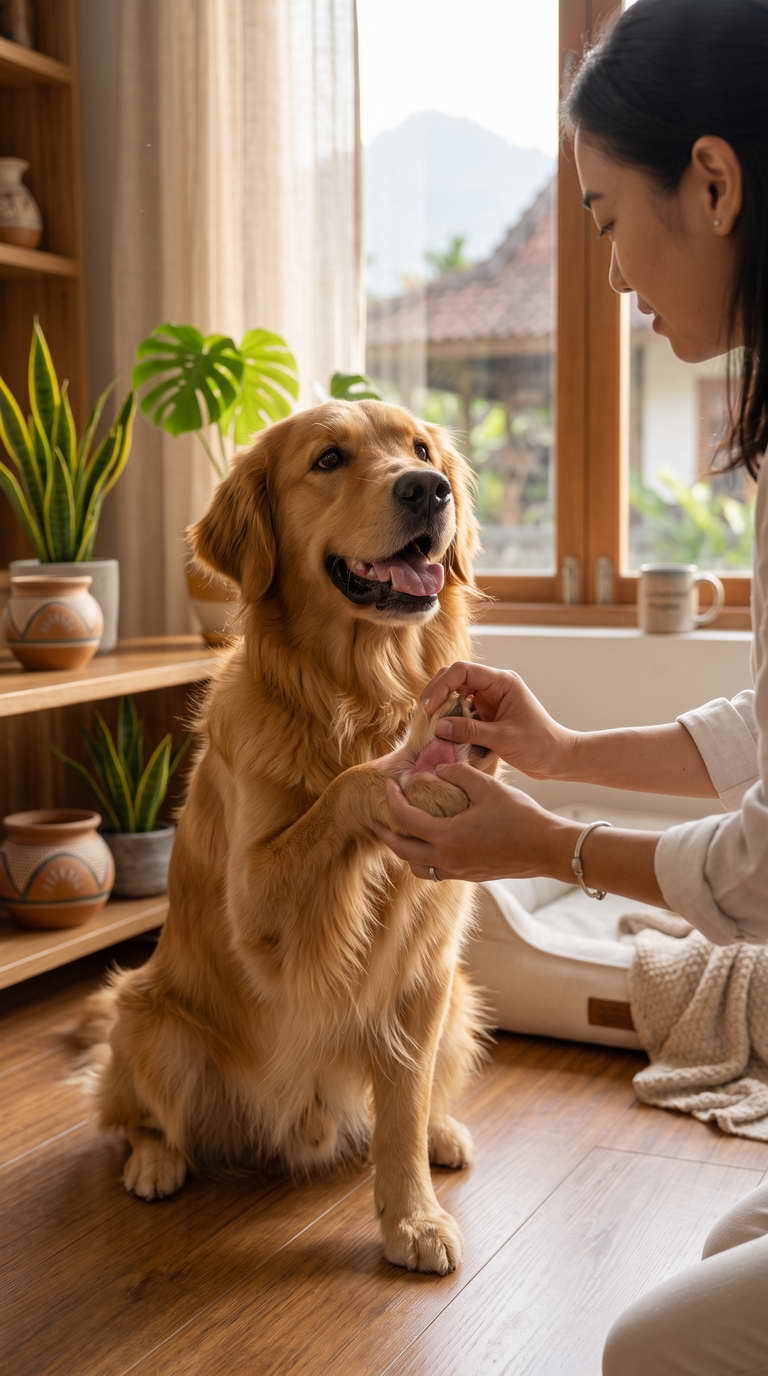
Quick Reference: What Your Dog’s Paws Are Telling You
Before booking a veterinary consultation or applying topical balms, use this visual diagnostic chart to assess what you see between their paw pads:
| Visual Clue on the Paw | Odor Profile | Licking Distribution | Most Probable Culprit | Immediate Action Step |
| Rusty Pink/Brown Stained Fur | Sour / Yeasty / Corn Chips | All 4 paws or both front paws | Chronic saliva staining from yeast (Malassezia) overgrowth | Medicated antifungal foot soaks; allergy check |
| Swollen Pea-Sized Red Bump | Neutral to slightly metallic | Single paw only | Interdigital cyst, embedded thorn, or foreign body | Gentle warm soak; vet removal if pus appears |
| Cracked, Peeling Pad Leather | Odorless | Contact pads only | Chemical burn from ice-melt salts, hot asphalt, or zinc deficiency | Soothing pet-safe paw balm; protective booties |
| Clean Paws, Zero Skin Redness | Fresh / Normal | Single wrist/carpal joint | Referred joint pain, osteoarthritic ache, or spinal pinch | Orthopedic veterinary exam; joint supplements |
| Bald Patches on Top of the Paw | Stale / Dirty | Upper surface of front paw | Acral lick granuloma (compulsive psychological habit) | Behavioral modification; Elizabethan cone barrier |
The Chemistry of Rusty Paws: Why Does the Fur Turn Red?
One of the most common questions dog owners ask when their pet licks constantly is: “Why is the fur on my dog’s white paws turning a dark reddish-brown color?”
                  ┌───────────────────────────────────────────────┐
                  │       The Porphyrin Saliva Staining Cycle     │
                  └───────────────────────┬───────────────────────┘
                                          │
         ┌────────────────────────────────┴────────────────────────────────┐
         ▼                                                                 ▼
┌─────────────────────────────────┐               ┌─────────────────────────────────┐
│     Endogenous Porphyrins       │               │      Oxidation & Rust Color     │
│ • Byproducts of red blood cell  │               │ • Porphyrins coat pale hair     │
│   breakdown naturally present   │               │ • Exposure to sunlight & air    │
│   in canine saliva and tears    │               │   turns molecules bright rust   │
│ • Clear liquid inside the mouth │               │ • Proves chronic licking weeks  │
└─────────────────────────────────┘               └─────────────────────────────────┘
The pink or rust-colored discoloration is not dried blood. Canine saliva and tear secretions contain microscopic, iron-rich biological molecules called porphyrins, which are natural metabolic byproducts of red blood cell breakdown.
When a dog licks their paws persistently over days and weeks, the iron-laden saliva saturates the hair shafts. As the wet fur is exposed to ambient oxygen and sunlight, the porphyrin molecules oxidize, permanently dyeing the hair a deep rust-red or mahogany hue.
Seeing rust-stained fur between the toes is undeniable clinical proof that your dog has been licking that area persistently for a prolonged period, even if you rarely catch them doing it during the day.
6 Major Reasons Why a Dog Keeps Licking Its Paws
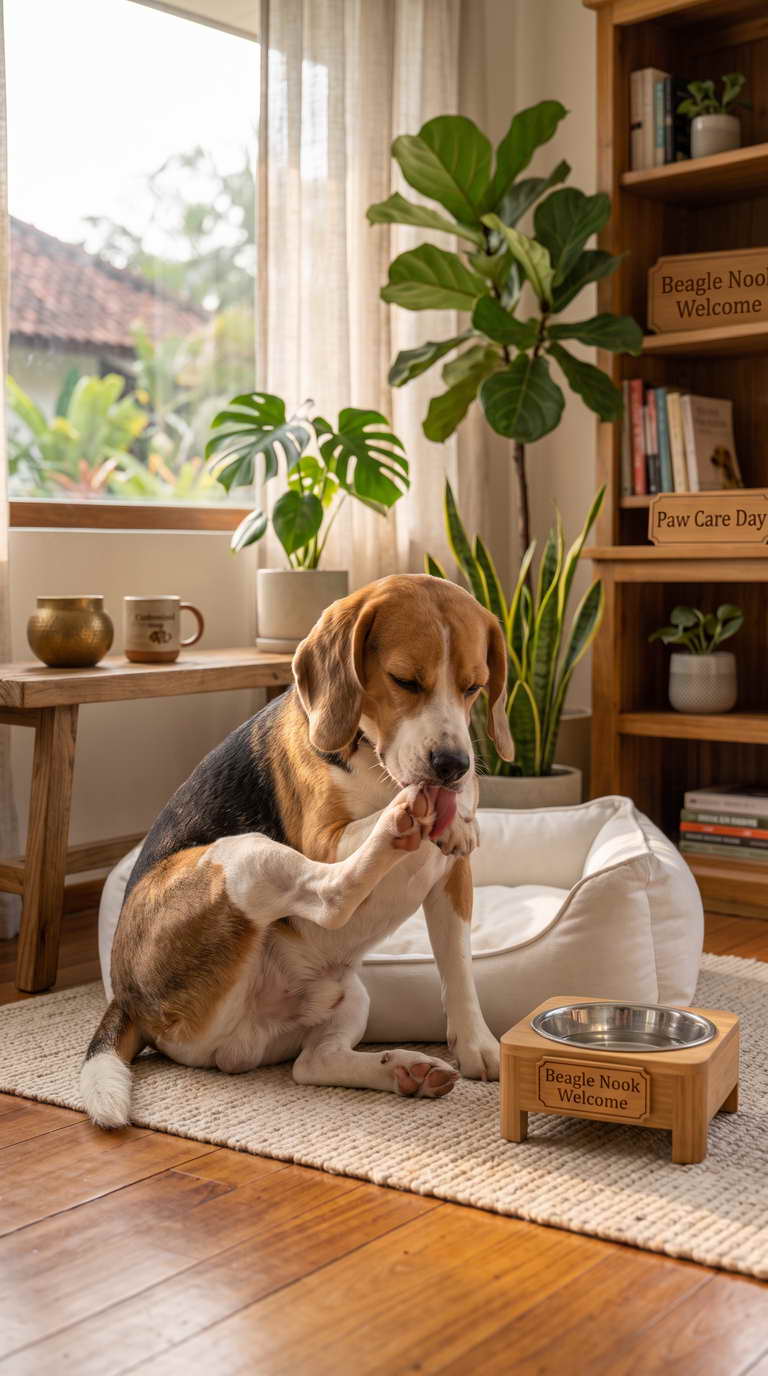
Canine paw licking generally stems from one of six primary physiological, medical, or behavioral categories:
1. Environmental and Seasonal Allergies (Atopy)
By far the most common cause of four-paw licking is canine atopic dermatitis. Dogs do not react to environmental allergens like humans do—they rarely get sneezing fits or runny noses. Instead, their allergies manifest through their skin, particularly where bare skin contacts the ground:
-
The Culprits: Grass pollens, weed seeds, outdoor mold spores, and indoor dust mites.
-
The Absorption Route: Allergens absorb directly through the thin skin between the paw pads. The canine immune system releases histamines and inflammatory cytokines, triggering intense localized pruritus (itching).
-
The dog licks to extinguish the burning itch, but their rough tongue strips the skin’s natural lipid barrier, compounding the irritation.
2. Secondary Yeast and Bacterial Infections
Healthy canine paws host microscopic populations of Malassezia pachydermatis (yeast) and Staphylococcus bacteria. However, a dog’s foot is a natural microclimate: warm, dark, and enclosed between fleshy toe pads.
-
When a dog licks due to a minor allergy or wet grass walk, their saliva introduces constant moisture.
-
This warm, wet environment causes yeast populations to explode, creating a pungent “corn chip” or “stale beer” odor.
-
Managing chronic dermatological flare-ups requires early intervention; the mechanics mirror the structural challenges seen in skin infection in german shepherd dogs, where dense coats and moisture traps fuel persistent epidermal inflammation.
3. Foreign Bodies and Physical Trauma (The Single-Paw Clue)
If your dog suddenly starts obsessing over one single paw while limping or holding the foot off the ground, suspect an acute mechanical injury rather than an allergy:
-
Foxtails and Grass Awms: In dry seasons across the American West and Midwest, needle-sharp grass awns (foxtails) latch onto fur. Their microscopic barbs ensure they travel in only one direction: forward. They can puncture the soft webbing between toes and migrate deep into the tissue, creating painful, draining abscesses.
-
Thorns, Glass Shards, and Burrs: Stepping on a tiny shard of glass or a rose thorn wedges debris into the thick keratin of the paw pad.
-
Insect Stings: Stepping directly on a ground wasp or fire ant mound produces sudden, acute swelling and frantic paw chewing.
4. Food Intolerances and Protein Allergies
Unlike seasonal allergies that fluctuate with spring and autumn pollen counts, food-induced paw licking is relentless and year-round.
-
Roughly 10% to 15% of allergic dogs suffer from adverse food reactions, almost universally triggered by intact animal proteins (such as beef, chicken, or dairy).
-
Feeding generic commercial kibbles loaded with mystery meat meals and high-starch fillers can exacerbate systemic inflammation.
-
Evaluating clean, scientifically verified formulations detailed across our guide to premium pet food brands provides clean, bioavailable protein sources that help preserve the body’s internal immune balance.
5. Orthopedic Pain, Neuropathy, and Arthritis
Canines cannot verbally communicate that their joints ache. Instead, they soothe deep skeletal discomfort by licking the skin directly over or near the source of pain.
-
Carpal and Digit Osteoarthritis: A senior dog with aching knuckle joints or wrist arthritis will lick their front paws to stimulate soothing endorphin release from the nervous system.
-
Referred Cervical Spine Pain: A pinched nerve in the neck or shoulder can send a tingling, “pins-and-needles” sensation down the nerve pathways into the front paws, prompting the dog to lick the foot in confusion.
6. Anxiety, Boredom, and Psychogenic Licking
Licking stimulates the release of serotonin and endorphins in the canine brain, acting as a natural self-soothing biofeedback mechanism.
-
If a dog experiences chronic boredom, lack of exercise, or severe separation distress, paw licking can transition into an obsessive-compulsive disorder.
-
Left unmanaged, continuous mechanical friction strips the skin completely, resulting in an Acral Lick Granuloma—a raised, thickened, ulcerated plaque of hard scar tissue that is notoriously difficult to heal.
       ┌──────────────────────────────────────────────────────────────┐
       │             The Destructive Paw-Licking Cycle                │
       └──────────────────────────────┬───────────────────────────────┘
                                      │
         ┌────────────────────────────┴────────────────────────────┐
         ▼                                                         ▼
┌─────────────────────────────────┐       ┌─────────────────────────────────┐
│     The Initial Trigger         │       │      The Chronic Escalation     │
│ • Grass pollen or yeast itch    │       │ • Strips protective lipid layer │
│ • Dog licks to soothe sensation │       │ • Saliva adds moisture & bacteria│
│ • Endorphins temporarily numb   │       │ • Severe secondary pyoderma     │
│   the discomfort                │       │ • Tissue ulcers & open sores    │
└─────────────────────────────────┘       └─────────────────────────────────┘
How to Conduct a Thorough Home Paw Inspection
Before heading to the veterinary clinic, perform a calm, step-by-step examination of the affected paw. Choose a well-lit area when your dog is resting peacefully.
Step 1: Check the Pad Surface ──► Step 2: Part the Interdigital Webbing ──► Step 3: Inspect Nails & Beds ──► Step 4: Smell the Foot
-
Inspect the Main Pads: Look for cuts, punctures, blistered burns from hot summer asphalt, or deep cracks caused by winter ice-melting chemicals.
-
Part the Webbing (The Hidden Zone): Gently separate each toe to examine the soft skin inside the folds. Check for red cysts, tiny foreign seeds, ticks, or weeping yellow discharge.
-
Examine the Nail Beds: Look closely at where the nail emerges from the toe. Healthy nail bases are pale; infected nail beds are swollen, crusty, and inflamed (paronychia).
-
The Scent Check: Take a gentle sniff of the paw pad. A normal paw smells earthy or neutral. A sharp, sour, vinegary, or sweet corn-chip smell confirms an active microbial infection.
Modern Veterinary Treatments: Stopping the Fire
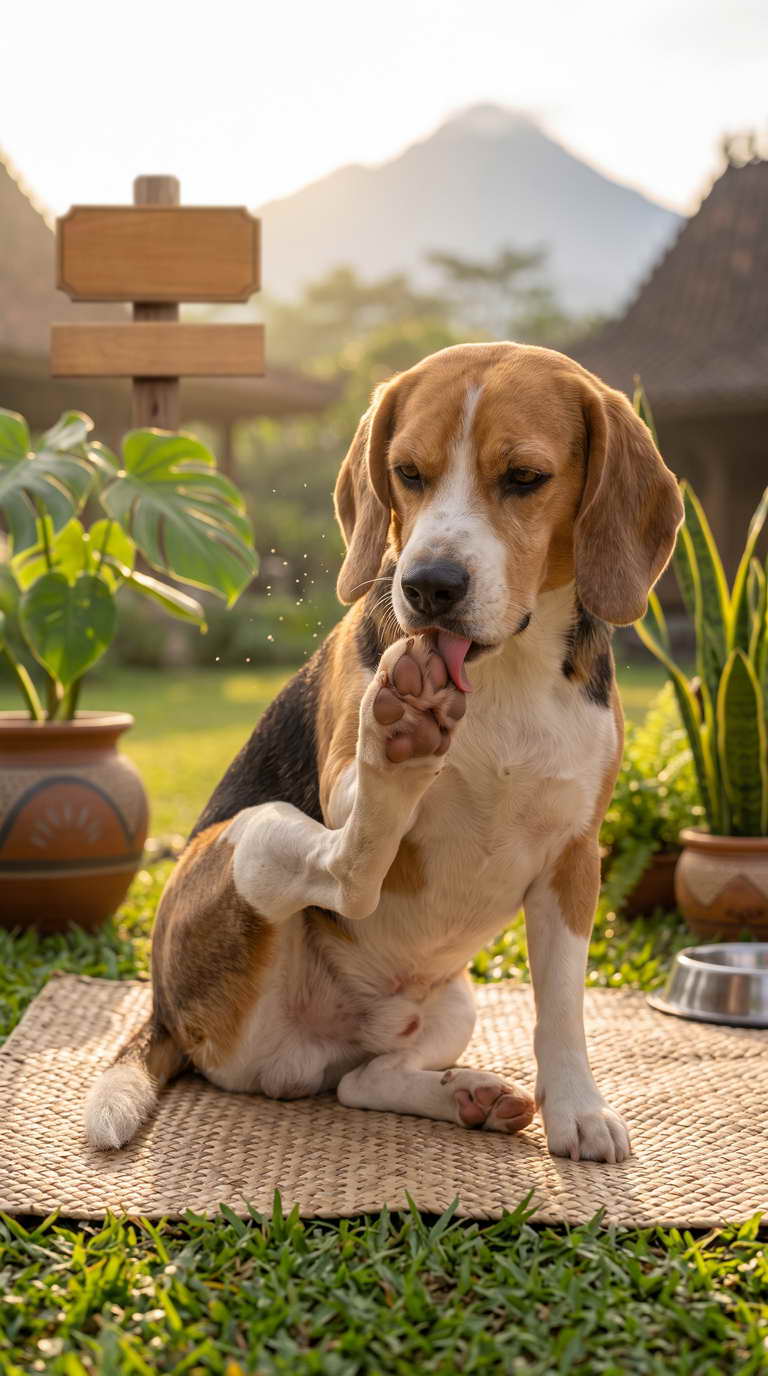
Relying on over-the-counter anti-itch sprays rarely cures the problem because sprays fail to address the underlying physiological trigger. A veterinary workup targets the root cause:
1. Advanced Cytology and Scrapings
Your veterinarian will press a microscope slide or a piece of clear adhesive tape directly against the moist skin between your dog’s toes. In less than ten minutes, this reveals whether the inflammation is fueled by round Staphylococcus bacteria, rod bacteria, or budding peanut-shaped Malassezia yeast cells.
2. Targeted Medical Therapies
-
Chlorhexidine / Ketoconazole Foot Baths: The gold standard topical therapy. Soaking the paws in a dilute solution of 2% to 4% chlorhexidine and ketoconazole for five to ten minutes twice weekly physically dissolves fungal biofilms and kills bacteria without systemic side effects.
-
Apoquel (Oclacitinib) & Cytopoint (Lokivetmab): If environmental allergies are the driver, modern targeted medications shut down the itch signal (Interleukin-31) within hours, giving the traumatized skin time to heal without the heavy side effects of oral prednisone steroids.
-
Allergen-Specific Immunotherapy: For chronic atopic canines, allergy testing (serum or intradermal) identifies exact pollen triggers, allowing veterinary dermatologists to formulate customized desensitization drops or shots.
The American Veterinary Medical Association (AVMA) emphasizes that topical foot soaks should always be followed by thorough patting with clean, dry towels. Leaving paws damp after bathing recreates the exact moist incubator that yeast requires to thrive.
Safe Home Care and Prevention Protocols
While chronic infections demand veterinary diagnostics, smart home management prevents minor irritations from escalating:
Veterinary-Approved Home Foot Care:
1. The Post-Walk Foot Wipe: Wipe paws with alcohol-free, unscented wipes after every walk.
2. Epsom Salt Soaks: Soak single swollen paws in warm water with pure Epsom salt for 5 minutes.
3. Natural Ear & Skin Balance: Maintain systemic hygiene across all prone skin folds.
4. Dog Booties in Extreme Weather: Protect delicate pads from hot pavement and salted snow.
1. The Post-Walk Pollen Wipe-Down
If your dog’s paw licking spikes during spring and summer, make it a non-negotiable household habit to wipe all four paws with a cool, damp microfiber cloth or a dedicated chlorhexidine wipe the moment they cross the threshold from a walk. This removes pollen grains before they absorb into the skin.
2. Holistic Care Across All Sensitive Folds
Canines prone to allergic paw inflammation frequently suffer from simultaneous yeast flare-ups in other warm body folds—most notably the ear canals.
Proactively understanding how to clean dog ears naturally at home using gentle, pH-balanced flushes like diluted apple cider vinegar and sterile saline helps maintain systemic yeast defense across your pet’s entire body.
3. What to NEVER Do: Dangerous Home Hacks
-
Never Wrap the Paw in Tight Human Bandages: Wrapping a dog’s foot with athletic tape or elastic bandages traps moisture, cuts off arterial circulation, and causes tissue necrosis within hours.
-
Never Use Undiluted Essential Oils: Essential oils like tea tree (Melaleuca) are toxic to canines when ingested, causing severe neurological tremors and liver strain when licked off.
-
Never Apply Thick Greasy Ointments Without a Cone: Smearing petroleum jelly or heavy human moisturizers on raw paws simply encourages the dog to lick more intensely.
The American Kennel Club (AKC) stresses that if an Elizabethan collar (the cone of shame) is necessary to stop self-trauma, use it consistently while waiting for medical treatments to take effect. Breaking the physical licking cycle is essential for damaged epithelial tissue to regenerate.
Frequently Asked Questions (FAQ)
Can I spray apple cider vinegar directly on my dog’s irritated paws?
Only if the skin is completely intact and unbroken. A dilute 50/50 mixture of organic apple cider vinegar and purified water has mild antifungal properties that can soothe minor yeast buildup. However, if your dog has chewed the skin raw, scratched sores, or has open cracks, vinegar will burn excruciatingly, damaging your companion’s trust.
Is paw licking a sign of boredom or loneliness?
It can be. Under-stimulated working breeds and intelligent companions frequently develop repetitive displacement behaviors when left alone for long stretches. If medical causes (allergies, yeast, foreign bodies) are completely ruled out by cytology, increasing daily physical exercise, introducing interactive snuffle mats, and offering frozen chew toys will often resolve the habit.
Why does my dog lick only their front paws?
Dogs focus on their front paws simply because they are the most physically accessible limbs while lying down in a relaxed sternal posture. Furthermore, the front carpal joints bear roughly 60% of a dog’s total body weight, making the front feet significantly more prone to impact micro-injuries, joint stiffness, and direct contact with sidewalk irritants.
Can dogs lick their paws because of an upset stomach?
Yes. Clinical veterinary studies have identified a subtle connection between chronic gastrointestinal discomfort (such as acid reflux, mild inflammatory bowel disease, or chronic nausea) and excessive surface licking—including floors, carpets, and front paws. If your dog licks their paws while simultaneously eating grass or experiencing digestive changes, discuss a GI workup with your veterinarian.
Final Thoughts: Restoring Comfort from the Ground Up
Watching your companion obsessively chew and lick their feet is distressing, but paw licking is not a permanent mystery. It is a visible, communicative symptom pointing directly toward an underlying physical trigger.
Whether the solution involves a five-minute antifungal foot bath, wiping pollen away after afternoon walks, adjusting their dietary proteins, or managing early joint arthritis, relief is entirely within reach.
Take a few minutes to inspect your dog’s paws calmly in good light. Work alongside your veterinarian to decode the microscopic clues, eliminate the underlying source of inflammation, and help your faithful companion walk comfortably, joyfully, and itch-free on every adventure.
About The Author

Leave a Reply