
Adopting a Rescue Dog: What to Expect During the Crucial First Week

PETSIDI – You have signed the adoption papers, bought the plush bed, stocked up on premium treats, and finally pulled into your driveway with your new shelter companion resting in the backseat. It feels like the triumphant final scene of a heartwarming movie.
However, as the front door swings open, reality quickly sets in. Instead of showering you with joyful gratitude, your new dog freezes in the entryway, refuses food, cowers behind the sofa, or has an immediate bathroom accident on your living room rug.
Panic starts creeping in: Did I make a mistake? Did the rescue shelter misjudge this dog’s temperament?
Take a deep breath. What you are witnessing is completely normal. Transitioning from the sensory overload of a noisy kennel to an unfamiliar home is an emotional shock for canines. Knowing what to expect first week adopting rescue dog transforms this overwhelming transition into a calm, structured bonding experience.
Here is your comprehensive day-by-day roadmap through the first seven critical days of welcoming a shelter dog home.
The First Week at a Glance: Daily Milestones
Before diving into the detailed daily breakdown, review this quick reference guide to canine emotional states during week one:
| Phase | Days | Dominant Emotional State | Primary Caregiver Goal | Common Behaviors |
| Arrival & Decompression | Day 1 | Sensory shock, exhaustion, shutdown | Low stimulation, safety, quiet retreat | Pacing, hiding, refusal to eat, deep sleeping |
| Cautious Exploration | Days 2 – 3 | Hesitant curiosity, low appetite | Predictable routine, potty mapping | Sniffing room perimeters, testing boundaries, whining |
| Routine Recognition | Days 4 – 5 | Emerging comfort, subtle trust | Positive reinforcement, calm handling | Seeking eye contact, wagging tail, loose body language |
| First Milestone | Days 6 – 7 | Baseline security, personality peek | Consistent boundaries, light enrichment | Playfulness, initiating physical contact, alert barking |
Understanding “Decompression”: Why Your Dog Isn’t Fully Themselves
To manage your expectations, understand the physiological toll of shelter life. Animal shelters are chaotic environments saturated with unfamiliar barks, chemical disinfectant smells, metal door clangs, and constantly changing caretakers.
When a dog enters that environment, their nervous system floods with cortisol (the primary stress hormone). Scientific studies referenced by organizations such as the American Society for the Prevention of Cruelty to Animals (ASPCA) highlight that elevated cortisol levels can take several weeks to return to baseline once an animal enters a stable environment.
During the first week, your rescue dog is operating in survival mode. The dog you interact with on Day 2 is rarely the dog you will share your life with six months down the road. They are neither broken nor deceitful—they are simply decompressing.
Day 1: The Arrival, Sensory Overload, and the “Shutdown”
The journey from the rescue vehicle to your doorstep represents the most vulnerable moment for a rescue dog.
The Leash Rule and the Outdoor Potty Walk
Before bringing your dog through the front door, take them immediately to their designated bathroom spot in your yard or nearby grass.
-
Keep the leash securely fastened, even within a fenced yard. Disoriented rescue dogs can scale six-foot fences or dart through open gates when panicked.
-
Walk slowly in small circles. Give them 10 to 15 minutes to sniff the grass and relieve themselves.
-
If they eliminate outdoors, praise them quietly. Avoid exuberant cheering or sudden high-pitched celebrations, which can startle a nervous dog.
Entering the House: Keep It Boring
The biggest mistake new adopters make is giving the dog free rein over a multi-story house. A massive, unfamiliar house is not an exciting palace to a rescue dog; it is an intimidating labyrinth filled with unpredictable corners.
-
Confine their initial world to one or two quiet rooms using baby gates.
-
Introduce them directly to their safe zone—a comfortable dog bed or open crate positioned in a low-traffic corner away from washing machines, blaring televisions, and front doorways.
-
Show them their water bowl, place a small meal nearby, and step back.
The Evening Shutdown
Do not be alarmed if your dog curls into a tight ball and sleeps for twelve consecutive hours, or conversely, paces back and forth along the walls. Refusing dinner on night one is entirely standard behavior. Ensure all doors and windows are latched, leave a nightlight on, and maintain a quiet household atmosphere.
Days 2 to 3: Cautious Exploration and Establishing the Blueprint
By the second and third days, the intense shock of the initial move begins to soften into guarded observation. Your dog is assessing whether your household is predictable and safe.
Establishing the Daily Rhythm
Dogs find safety in unwavering predictability. Begin establishing an exact schedule that matches what you can maintain long term:
-
7:00 AM: Leash walk to the designated potty area.
-
7:30 AM: Breakfast served in their quiet zone.
-
12:30 PM: Midday relief walk and brief garden stroll.
-
5:30 PM: Dinner served at the same station.
-
6:00 PM: Evening walk and light sniffing session.
-
9:30 PM: Final potty break before lights out.
When feeding, leave the bowl down for 20 minutes. If they do not eat, calmly lift the food and re-offer it at the next scheduled feeding window. Avoid hovering over the dog while they eat, as shelter dogs often fear resource competition.
Managing the Bathroom Routine (Preventing Accidents)
Assume your rescue dog is not house-trained, regardless of what the shelter paperwork indicates. Stress disrupts bladder and bowel control.
-
Escort them outdoors after waking up, after meals, after naps, and every three hours while awake.
-
If an accident occurs indoors, never scold, yell, or rub their nose in the mess. Punishing a frightened rescue dog teaches them to fear eliminating in front of you, which leads to secretive accidents behind furniture. Clean the area with an enzymatic cleaner to erase pheromone scents.
Days 4 to 5: Subtle Shifts in Trust and Boundary Testing
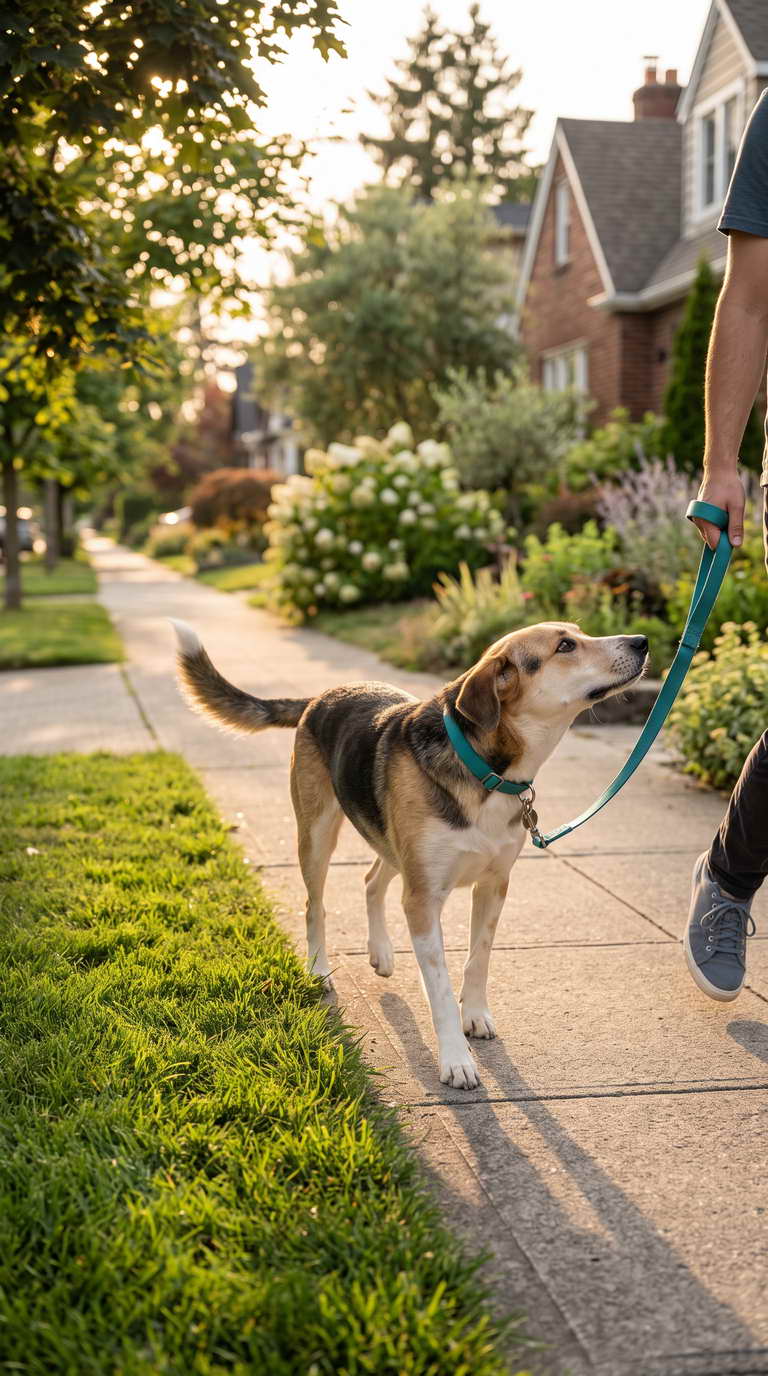
As the middle of the first week approaches, your dog’s true baseline personality begins peeking through the fog of stress.
Signs of Emerging Comfort
Watch for these subtle green flags indicating that their parasympathetic nervous system is re-engaging:
-
They begin taking treats directly from your flat palm with gentle pressure.
-
Their body language shifts from stiff, tucked-tail posture to loose, rhythmic tail wags.
-
They sigh deeply when settling down to rest, stretching their legs outward rather than curling into a defensive ball.
-
They hold gentle eye contact without immediately looking away in deference.
       ┌─────────────────────────────────────────────────────────┐
       │             Canine Stress to Trust Spectrum             │
       └────────────────────────────┬────────────────────────────┘
                                    │
          ┌─────────────────────────┴─────────────────────────┐
          ▼                                                   ▼
┌─────────────────────────────────┐ ┌─────────────────────────────────┐
│     Stressed (Days 1 to 3)      │ │      Settling (Days 4 to 7)     │
│ • Tucked tail & pinned ears     │ │ • Loose, swaying spine          │
│ • Excessive lip licking/yawning │ │ • Soft, almond-shaped eyes      │
│ • Refusing high-value treats    │ │ • Eagerly accepting meals      │
│ • Hypervigilant startle reflex  │ │ • Relaxed lateral sleeping      │
└─────────────────────────────────┘ └─────────────────────────────────┘
The Rule on Visitors: Maintain the “No Guest” Policy
Days 4 and 5 are when friends, neighbors, and extended family often text: “Can we stop by to meet the new pup?”
Politely decline. Introducing your dog to unfamiliar people during the first week resets their decompression clock. Every new voice, foreign perfume, and outstretched hand forces the dog to evaluate whether that person represents a threat. Keep your circle limited strictly to immediate household members for the first 7 to 14 days.
Days 6 to 7: The End of Week One and Glimpses of the True Self
By the end of the seventh day, the dog realizes this living space is not a temporary shelter transport holding bay.
Emerging Energy and Testing Household Boundaries
As anxiety recedes, normal canine behaviors emerge:
-
You may hear your dog bark for the first time when a courier knocks at the door.
-
They may test household boundaries by sniffing kitchen counters or investigating a shoe left on the carpet.
-
They may express interest in soft toys or chew items.
Respond to boundary testing with redirection rather than anger. If they mouth a leather slipper, exchange it with a durable rubber chew toy paired with soft praise.
The Gentle Introduction of Enrichment
Physical exercise should remain controlled during week one, but mental stimulation can now expand. Engage their brain with simple, calming activities:
-
The Snuffle Mat: Scatter their dry kibble across a fleece snuffle mat to encourage scent-driven foraging. Sniffing lowers canine heart rates.
-
Frozen Kong: Fill a hollow rubber toy with canned pumpkin, dog-safe peanut butter, or soaked kibble, then freeze it. Licking releases endorphins that promote natural relaxation.
What NOT to Do During the First Week

Well-meaning adopters frequently cause setbacks by showering a rescue dog with overwhelming affection too quickly. Avoid these common traps:
-
Do Not Throw a “Welcome Home” Party: No backyard barbecues, children’s playdates, or trips to the local pet store.
-
Do Not Visit the Dog Park: Dog parks are chaotic arenas filled with unpredictable animal dynamics. Taking an unbonded, stressed rescue dog to an off-leash park in week one invites fear aggression, fights, or fence-scaling escapes.
-
Do Not Force Physical Affection: Hugging a dog, pressing your face against their muzzle, or leaning directly over their head are perceived as intimidating physical dominance displays in canine body language. Let the dog initiate physical contact.
-
Do Not Book Non-Urgent Vet Visits on Day 1: Unless the rescue requires an immediate intake exam or the dog exhibits acute illness (severe diarrhea, persistent coughing, bleeding), give them three to four days to decompress before visiting a veterinary clinic.
-
Do Not Introduce Resident Pets Too Fast: Rushing face-to-face greetings between your new rescue and your existing dog or cat on the first day can cause permanent territorial friction. Utilize separate rooms and scent swaps across baby gates first.
The 3-3-3 Rule: Looking Past the First Seven Days
The first week is only the foundational layer of a broader psychological journey known throughout the animal welfare community as the 3-3-3 Rule. This framework is widely championed by established organizations like the Animal Humane Society to guide new adopters through realistic expectations:
-
The First 3 Days: The dog feels overwhelmed, scared, and disoriented. They do not fully understand what is happening and may shut down, refuse food, or hide.
-
The First 3 Weeks: The dog recognizes the daily schedule. They know when food is served, understand potty walk routines, and feel confident navigating their living area.
-
The First 3 Months: The dog finally feels genuinely at home. Complete mutual trust has blossomed, past shelter trauma recedes, and their true, joyous personality is firmly established.
Understanding this trajectory reminds you that week one is about building safety, not perfection.
Critical Supplies Checklist for Week One
Ensure you have these essential items ready to minimize disruptions:
-
Martingale Collar or 3-Point Escape-Proof Harness: Rescue dogs are notorious for slipping out of standard flat collars when startled by street noises.
-
6-Foot Fixed Leash: Avoid retractable leashes entirely, which offer zero control and snap easily under panic.
-
Enzymatic Odor Eliminator: Essential for breaking down the chemical proteins of indoor potty accidents.
-
Baby Gates / Playpens: Crucial for managing living boundaries without isolating the dog behind closed, dark doors.
-
Calming Pheromone Diffuser (Adaptil): Emits synthetic dog-appeasing pheromones that ease canine anxiety naturally.
Frequently Asked Questions (FAQ)
What should I do if my rescue dog refuses to eat on the first day?
Refusing meals during the first 24 to 48 hours is entirely normal. Stress suppresses canine appetite. Ensure fresh water is always available, place the food bowl in a secluded area, and give the dog privacy. You can entice them by mixing a spoonful of plain boiled chicken or warm bone broth into their dry food.
Is it normal for my new rescue dog to sleep all day?
Yes. Adrenaline and cortisol keep shelter dogs in a constant state of hypervigilance. Once they realize they are in a safe, quiet home, their bodies finally surrender to mental and physical exhaustion. Deep, prolonged sleep during days 1 to 3 is a healthy sign of decompression.
Should I crate train my rescue dog right away?
Introduce the crate as an open, cozy sanctuary rather than a locked confinement cell during the first week. Place soft bedding and treats inside, leaving the crate door open. If the dog enters willingly to sleep, praise them gently. Forcing an unfamiliar dog into a locked crate on night one can provoke severe panic if they had negative confinement experiences in the past.
How do I handle whining or crying at night?
Position the dog’s safe bed or open crate within earshot or in your bedroom during the first few nights. Complete isolation in a dark laundry room can amplify abandonment distress. Hearing your steady breathing provides emotional reassurance that they are not alone.
Final Thoughts: Patience Is Your Greatest Asset
The first week with a rescue dog is rarely an uninterrupted parade of picture-perfect cuddles. It is a week defined by subtle victories: the first relaxed tail wag, an empty food bowl, a clean night without an indoor accident, or the soft moment your dog places their chin against your knee.
Avoid the temptation to judge your long-term compatibility by what happens during these initial seven days. Lead with unwavering patience, quiet routines, gentle boundaries, and low expectations.
By giving your rescue dog the gift of time and space to decompress, you are laying the indestructible foundation for a lifetime of unconditional loyalty and devoted companionship.
About The Author

Leave a Reply