
How to Stop Puppy Biting Feet When Walking: A Step-by-Step Training Blueprint
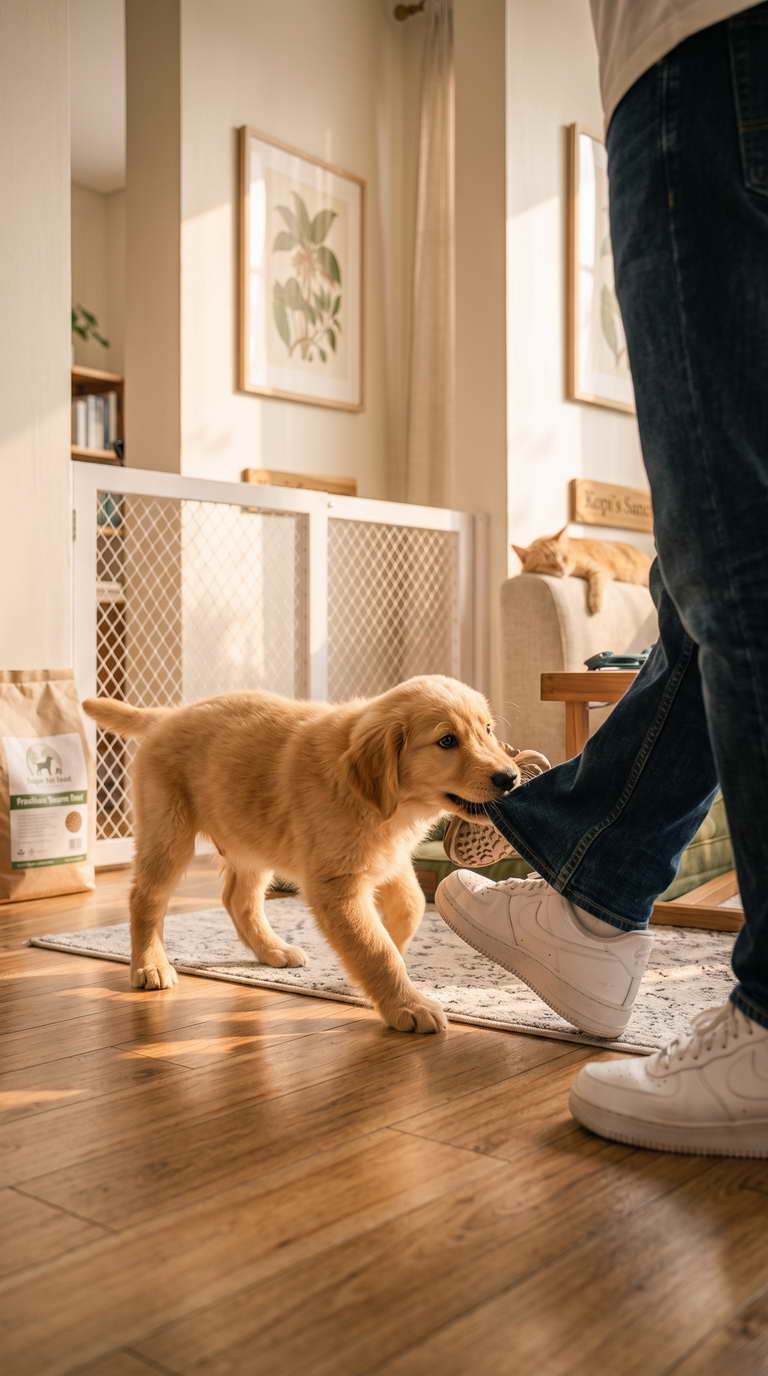
PETSIDI – Every morning starts with the best of intentions. You lace up your sneakers, take a step toward the kitchen to pour your coffee or prepare a leash, and suddenly: CHOMP.
A set of needle-sharp, razor-blade puppy teeth sinks directly into the back of your Achilles tendon.
You yelp in pain and try to shake your foot free, but that sudden movement only excites your puppy further. They drop into an energetic play bow, start growling playfully, and lunge again—clamping onto your shoe laces, dragging along your slippers, or tearing through your favorite wool socks. Within ten seconds, a simple walk across the living room has turned into a painful wrestling match.
Why does your adorable, floppy-eared ball of fluff suddenly transform into a tiny ankle piranha every single time you move your feet? More importantly, how to stop puppy biting feet when walking without resorting to frustrating yelling, scolding, or punishment that damages your bond?
The good news: your puppy is neither vicious nor spiteful. Ankle-biting is an instinctive developmental milestone fueled by predatory curiosity, visual motion, and natural play drives.
Here is your comprehensive, veterinarian- and trainer-approved guide to decoding why puppies attack moving feet—and the exact step-by-step techniques to neutralize this painful habit for good.
Quick Reference: Techniques That Work vs. Mistakes That Escalate Biting
Before diving into the detailed step-by-step training exercises, compare the effective interventions against common instinctive handler reactions that inadvertently make the biting worse:
| Handler Reaction | Puppy’s Interpretation | Outcome on Biting |
| Yelping, shouting, or saying “Ouch!” | High-pitched squeals mimic wounded prey or excited littermates | Escalates: The puppy bites harder and becomes more frantic |
| Jerking, kicking, or pulling foot away quickly | Sudden jerky movement simulates fleeing game | Escalates: Triggers chase instinct and firmer clamping |
| Pushing the puppy away with your hands | Physical contact is interpreted as playful roughhousing | Escalates: Puppy bounces back and bites hands instead |
| The “Tree Freeze” (Stopping completely) | Sudden loss of motion makes feet instantly boring | Neutralizes: Puppy disengages and looks up in confusion |
| The Upfront Toy Barrier (Pre-emptive redirection) | Provides an appropriate, rewarding target for teeth | Neutralizes: Teaches pup what is acceptable to bite |
| Scatter Feeding / Sniff-Lure | Drops arousal levels and activates the parasympathetic brain | Eliminates: Replaces predatory chase with calm foraging |
The Psychology: Why Do Puppies Attack Feet and Ankles?
To solve the ankle-biting crisis, you must look at human feet through the biological lens of a young canine.
       ┌──────────────────────────────────────────────────────────────┐
       │             Why Moving Feet Drive Puppies Crazy              │
       └──────────────────────────────┬───────────────────────────────┘
                                      │
         ┌────────────────────────────┼────────────────────────────┐
         ▼                            ▼                            ▼
┌───────────────────────────┐ ┌───────────────────────────┐ ┌───────────────────────────┐
│     The Motion Magnet     │ │     Teething Discomfort   │ │     The Chase Game          │
│ • Feet move like prey     │ │ • Gums itch and throb     │ │ • Fleeing humans look fun   │
│ • Low to the ground       │ │ • Chewing relieves ache   │ │ • Shouting sounds like play │
│ • Flapping pants & laces  │ │ • Footwear has dense chew │ │ • Kicking mimics wrestling  │
└───────────────────────────┘ └───────────────────────────┘ └───────────────────────────┘
1. Motion Triggers the Predatory Motor Sequence
Domestic canines inherit hardwired predatory reflexes: orient, eye-stalk, chase, grab-bite, and shake.
When you walk, your feet, shoelaces, slippers, and swinging pant cuffs move erratically across the floor at puppy eye level. To an eight- to sixteen-week-old puppy whose brain is wired to chase darting objects, a moving shoe looks identical to a rabbit or rodent scurrying through the grass. The impulse to pounce and bite is practically involuntary.
2. Genetic Herding Drives
If your puppy belongs to a herding or working breed—such as an Corgi, Australian Shepherd, Border Collie, German Shepherd, or Cattle Dog—ankle biting is in their DNA.
For centuries, these breeds were selectively bred to nip at the heels of stubborn cows and sheep to move them without getting kicked. In a human household, a running toddler or a walking adult triggers those exact heel-driving instincts.
3. Teething and Oral Exploration
Puppies lack hands; they explore the world, map tactile textures, and soothe sore, inflamed gums entirely with their mouths. Deciduous puppy teeth erupt between three and six weeks of age, while permanent adult teeth begin pushing through between twelve and twenty-four weeks. Rubber soles, thick leather boots, and knit socks provide immense physical relief to swollen gums.
4. Accidental Reinforcement (The Human Reaction Trap)
When your puppy bites your ankle, what do you naturally do?
-
You gasp or squeal (auditory reward).
-
You look down and pay attention to them (social reward).
-
You wave your foot or nudge them away (interactive play reward).
Even if your intention is negative, your puppy views your response as an exciting, participatory game. You have just become the ultimate interactive squeaky toy.
The 4-Step Protocol: How to Stop Puppy Biting Feet When Walking
Neutralizing this behavior requires replacing your natural physical reactions with calculated, calm, and repetitive behavioral cues.
Step 1: The Statue Freeze ──► Step 2: Mark & Disengage ──► Step 3: Toy Redirection ──► Step 4: Scatter Release
Step 1: Execute the “Statue Freeze” Immediately
The moment teeth touch your skin, socks, or footwear, freeze your entire body instantly.
-
Stop Walking Dead in Your Tracks: Do not take one more step. Planting your feet removes the kinetic motion that fuels their predatory arousal.
-
Cross Your Arms: Tuck your hands high into your armpits. This prevents the puppy from redirecting their biting to your fingers.
-
Break Eye Contact: Look up at the ceiling or turn your head away. Eye contact is interpreted as social engagement.
-
Remain Completely Silent: Do not say “No!”, “Ouch!”, or “Stop it!” Silence removes all auditory stimulation.
When you become a boring, immovable tree trunk, your puppy’s brain encounters a sudden disconnect: biting feet causes all fun, movement, and human feedback to vanish entirely. Within three to eight seconds, the puppy will usually let go and sit back, puzzled.
Step 2: The Pre-Emptive Tug Defense (Proactive Redirection)
Waiting until your puppy bites you means you are always reacting. The most effective training is proactive prevention.
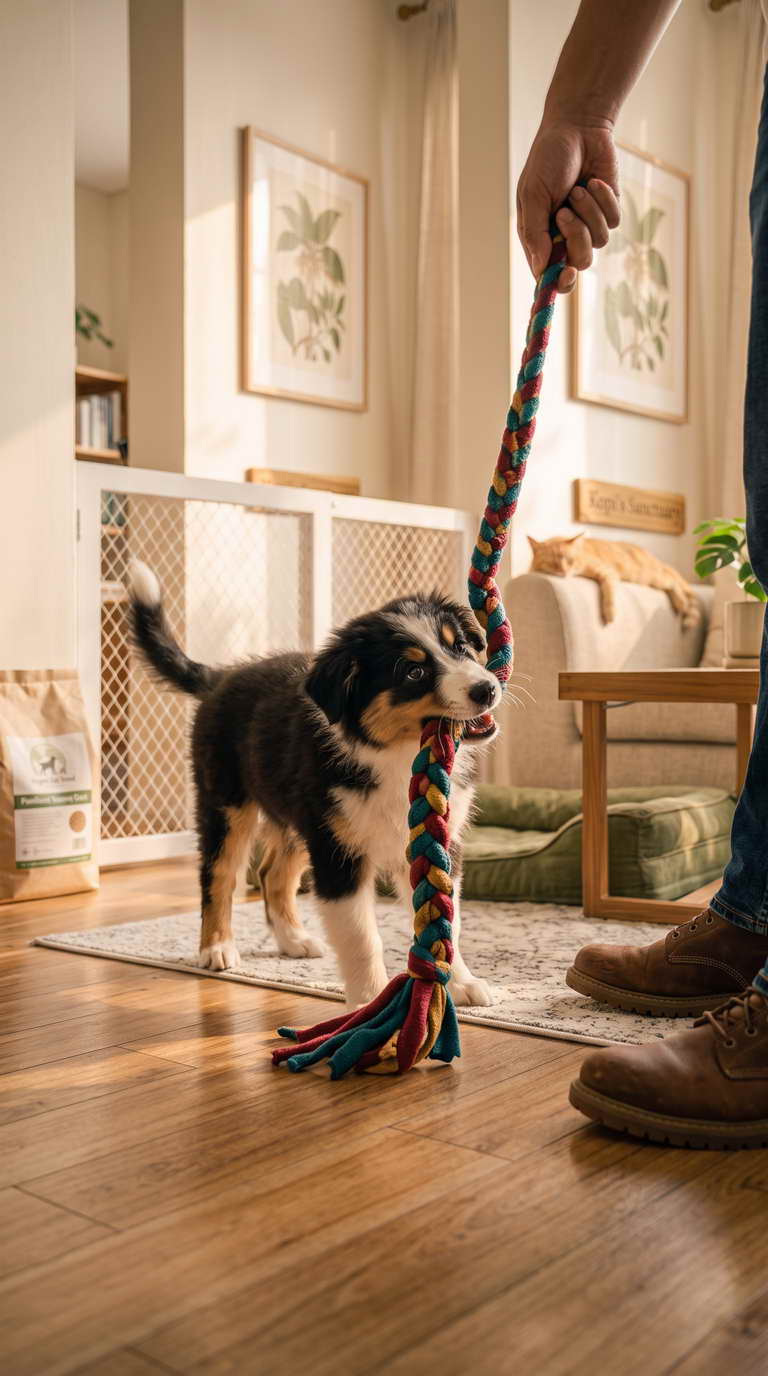
Keep long, durable tug toys stationed strategically throughout your home (on coffee tables, kitchen counters, or tucked into your back pocket).
Walking Strategy:
[Hold 3-Foot Fleece Tug Toy Low] ──► [Take Steps Forward] ──► [Puppy Grabs Toy, NOT Feet] ──► [Praise!]
-
Before you take a step across the room, present a long fleece braided rope or flirt pole at floor level.
-
Move the toy along the floor with small, wriggling movements ahead of you as you walk.
-
Because the toy is moving and far more interesting than your shoes, your puppy will bite the toy instead.
-
Praise them warmly: “Good puppy! Get your toy!”
This teaches the pup an essential life lesson: Moving across the house is a game where you carry toys in your mouth, not bite human heels.
Step 3: The “Find It” Scatter Feed Technique
If your puppy enters an over-aroused, hyperactive biting frenzy where toys are ignored, use canine olfactory biology to your advantage.
According to behavioral research supported by organizations like the American Kennel Club (AKC), sniffing and ground-foraging dramatically lowers canine heart rates, engaging the calming parasympathetic nervous system.
-
Carry a small pouch of tiny, non-crumbly training treats or a portion of their daily kibble in your pocket.
-
As you begin walking through high-trigger areas (such as the hallway or towards the back door), toss a small handful of treats across the floor away from your feet and say: “Find it!”
-
The sound of kibble hitting the floor diverts their vision away from your shoes.
-
While the puppy’s nose is glued to the floor vacuuming up treats, calmly continue your walk without disturbance.
Step 4: The 30-Second “Reverse Time-Out”
What if the freeze technique fails, and your puppy persistently thrashes at your pant legs or breaks the skin?
Do not physically strike, crate, or scold the puppy. Instead, implement a reverse time-out—where you remove yourself from the puppy, rather than forcing the puppy into isolation:
-
Step calmly over a sturdy baby gate, or step into an adjacent room and close the door behind you, leaving the puppy on the other side.
-
Wait in silence for exactly 30 to 45 seconds.
-
Re-enter the space neutrally. If the puppy approaches calmly, resume interaction. If they immediately re-lunge at your feet, step back over the barrier.
This delivers a clear, bloodless social consequence: Teeth on humans means the human completely disappears. Puppies are deeply social animals; loss of your presence is the most impactful non-aversive correction available.
Environmental Management: Eliminating Triggers
Training takes weeks to solidify into muscle memory. In the meantime, modifying your household environment prevents bad habits from becoming reinforced:
1. Ditch the “Flappy” Wardrobe
During the peak puppy teething phase (8 to 20 weeks), adjust what you wear around the house:
-
Avoid trailing bathrobe ties, flared lounge pants, dangling shoelace loops, and fluffy animal-head slippers. These items are irresistible biting bait.
-
Opt for fitted leggings, slip-on shoes without laces, or indoor rubber crocs/clogs that provide thick barrier protection and offer no swinging fabric to chase.
2. Leash Indoors (The “Umbilical Cord” Method)
When walking through the house, keep your puppy attached to a lightweight, 6-foot indoor drag leash. If the puppy spots your feet and prepares to stalk, you can step gently on the leash or use it to hold them three feet away from your legs without engaging in a hands-on physical struggle.
3 Critical Mistakes That Accidentally Escalate Foot Biting
Even well-meaning pet parents often fall into instinctual handling errors that prolong the ankle-biting phase:
Common Mistakes vs. Safe Training Alternatives:
❌ High-Pitched Yelping ───────► Triggers excitement prey reflex (Puppy bites harder)
✔️ Stone-Cold Silence ────────► Removes all stimulation (Puppy gets bored)

❌ Pushing Away with Hands ───► Interpreted as canine wrestling (Puppy re-engages)
✔️ Standing Completely Still ──► Freezes the game immediately (Puppy stops)

❌ Locking in Crate as Threat ─► Crate becomes associated with punishment and fear
✔️ Neutral Baby Gate Time-Out ─► Calms over-stimulated nervous system peacefully
-
The “High-Pitched Yelp” Myth: Popular internet advice often tells owners to imitate a puppy littermate by letting out a high-pitched “Yelp!” when bitten. While this occasionally works for soft-mouthed breeds, high-drive herding dogs, terriers, and working breeds interpret yelping as the squeal of captured prey. It spikes adrenaline and makes them bite with increased ferocity.
-
Pushing the Puppy Away: When you reach down to pry puppy jaws off your shoes, your hands become secondary targets. Furthermore, canines play by shoving and body-checking; pushing them away is viewed as an invitation to a playful wrestling brawl.
-
Using the Crate as Punishment: Never shove an ankle-biting puppy angrily into their sleeping crate. According to welfare protocols established by the American Society for the Prevention of Cruelty to Animals (ASPCA), a dog’s crate must remain a secure, peaceful haven. If a time-out is required, use a utility hallway, bathroom, or step behind a baby gate.
Is It Teething, Play, or Aggression?
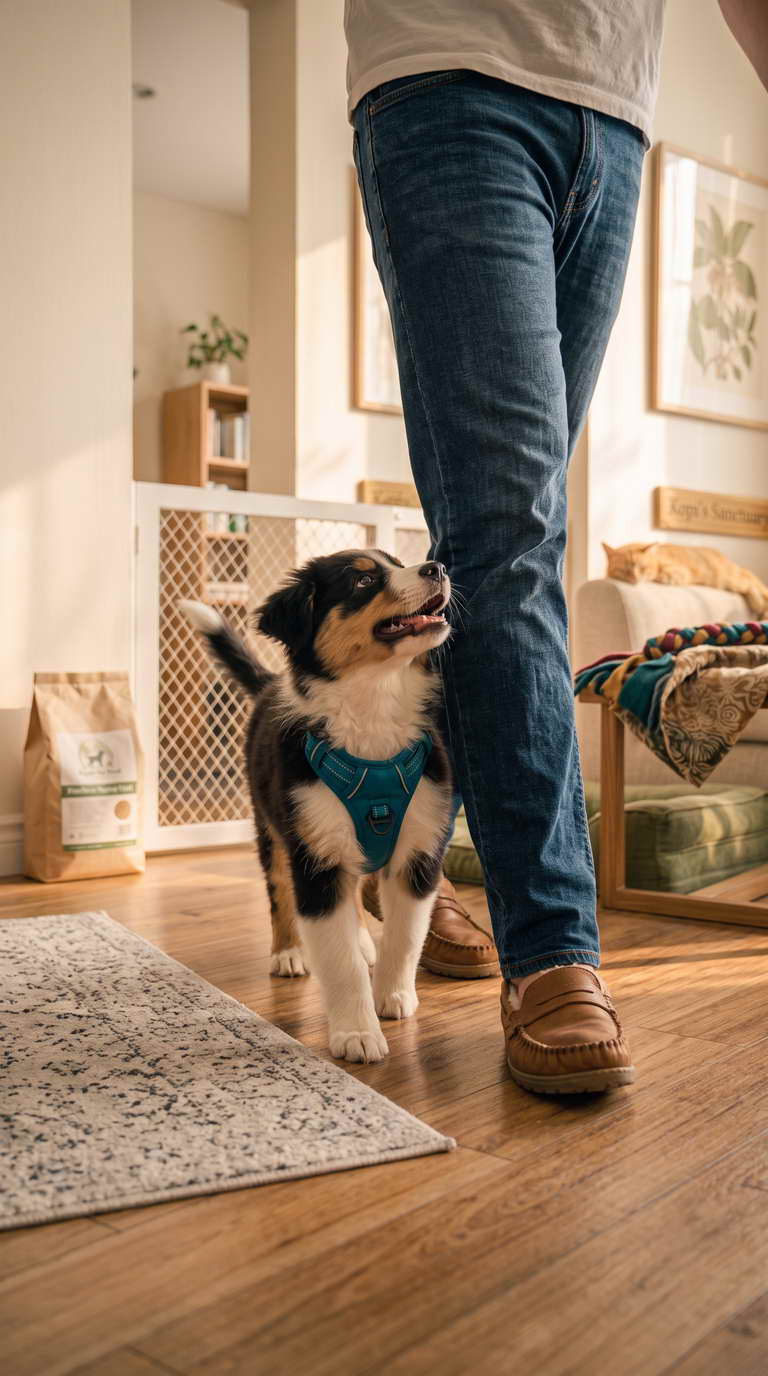
New puppy owners frequently contact trainers in tears, worried that their 10-week-old puppy is displaying early “canine aggression” because they growl and bare teeth while biting ankles.
True aggression in young puppies is extraordinarily rare.
Normal Play & Teething Behavior:
-
Biting occurs primarily during high-energy periods (early morning, right before dinner, or during the evening “zoomies”).
-
Growls are accompanied by loose, wiggly spines, open-mouthed grins, and wagging tails.
-
The puppy easily redirects to food or squeaky toys once movement stops.
When to Seek Certified Evaluation:
If foot-biting is accompanied by a stiff, frozen spine, white-eyed staring (whale eye), defensive lunging over dropped food or items (resource guarding), or persistent unprovoked snarling, consult a Certified Professional Dog Trainer (CPDT-KA) or a Veterinary Behaviorist (DACVB) for early behavioral assessment.
Frequently Asked Questions (FAQ)
At what age do puppies usually stop biting feet?
Most puppies naturally phase out intense foot and ankle biting between 5 and 7 months of age, coinciding with the complete emergence of their adult teeth and improved impulse control. Consistent training and redirection accelerate this timeline significantly.
Why does my puppy only bite my ankles and not my partner’s?
Puppies target whoever offers the highest interactive reward. If you react by gasping, dancing, laughing, or running away, your feet become a thrilling game. If your partner stands still and ignores the puppy, the puppy learns that biting their feet yields zero entertainment value.
Can I spray my shoes with bitter apple spray?
Taste deterrents (such as bitter apple or cherry sprays) can be applied to boots, sneakers, and pant hems as a secondary tool. While some puppies dislike the taste and back off, many determined puppies will power through the bitter flavor if the kinetic joy of the chase remains rewarding. Deterrent sprays should support—not replace—behavioral redirection.
Why does the biting get worse in the evening?
This is the notorious “witching hour” or evening zoomies. By 7:00 PM, young puppies are often physically overtired and mentally over-stimulated, causing a breakdown in emotional regulation (much like an overtired toddler throwing a tantrum). When evening ankle attacks peak, the pup usually needs a safe chew toy and an enforced nap in a quiet, dark room.
Final Thoughts: Consistency Beats Frustration
Learning how to stop puppy biting feet when walking is not an overnight transformation; it is a test of repetitive, patient consistency. Every time you freeze into a boring tree, offer a toy before you take a step, or scatter kibble to redirect their focus, you are helping your puppy wire their brain toward mature self-control.
Keep your training calm, protect your ankles with sensible indoor footwear, and celebrate the small victories.
Before you know it, those sharp puppy teeth will be replaced by permanent adult teeth, the frustrating ankle attacks will fade into memory, and your companion will happily walk by your side without taking a single bite out of your shoes.
About The Author

Leave a Reply