
The Ultimate Dog Treadmill Guide: How to Choose, Train, and Exercise Your Pup Indoors
PETSIDI – It is 6:30 AM in mid-January. Outside your window, a freezing blizzard howls across the driveway, leaving ice sheets and sub-zero wind chills in its wake. Or perhaps it is mid-July in Phoenix, Arizona, where the asphalt is hot enough to blister canine paw pads within thirty seconds of stepping outside.
Meanwhile, your high-energy canine is pacing frantically around your kitchen island, squeaking a rubber toy incessantly, and nudging your knees with desperate enthusiasm.
Every dog owner has faced this dilemma: extreme weather, long working hours, personal physical limitations, or urban living constraints that make providing sufficient outdoor cardiovascular exercise practically impossible. A bored, under-exercised dog will inevitably invent their own destructive forms of indoor entertainment—chewing baseboards, barking at delivery vans, or bouncing off living room furniture.
Enter the dedicated dog treadmill.
Once reserved exclusively for elite canine agility athletes, veterinary rehabilitation clinics, and working military canines, canine treadmills have rapidly transitioned into mainstream American living rooms. But is a treadmill genuinely safe for everyday household pets? Can you simply put your dog on your own human treadmill, or does canine biomechanics require purpose-built machinery?
Here is your comprehensive, veterinarian-informed buyer’s and training guide to the dog treadmill—covering motorized models versus manual slatmills, structural safety features, step-by-step acclimation blueprints, and common operational errors to avoid.
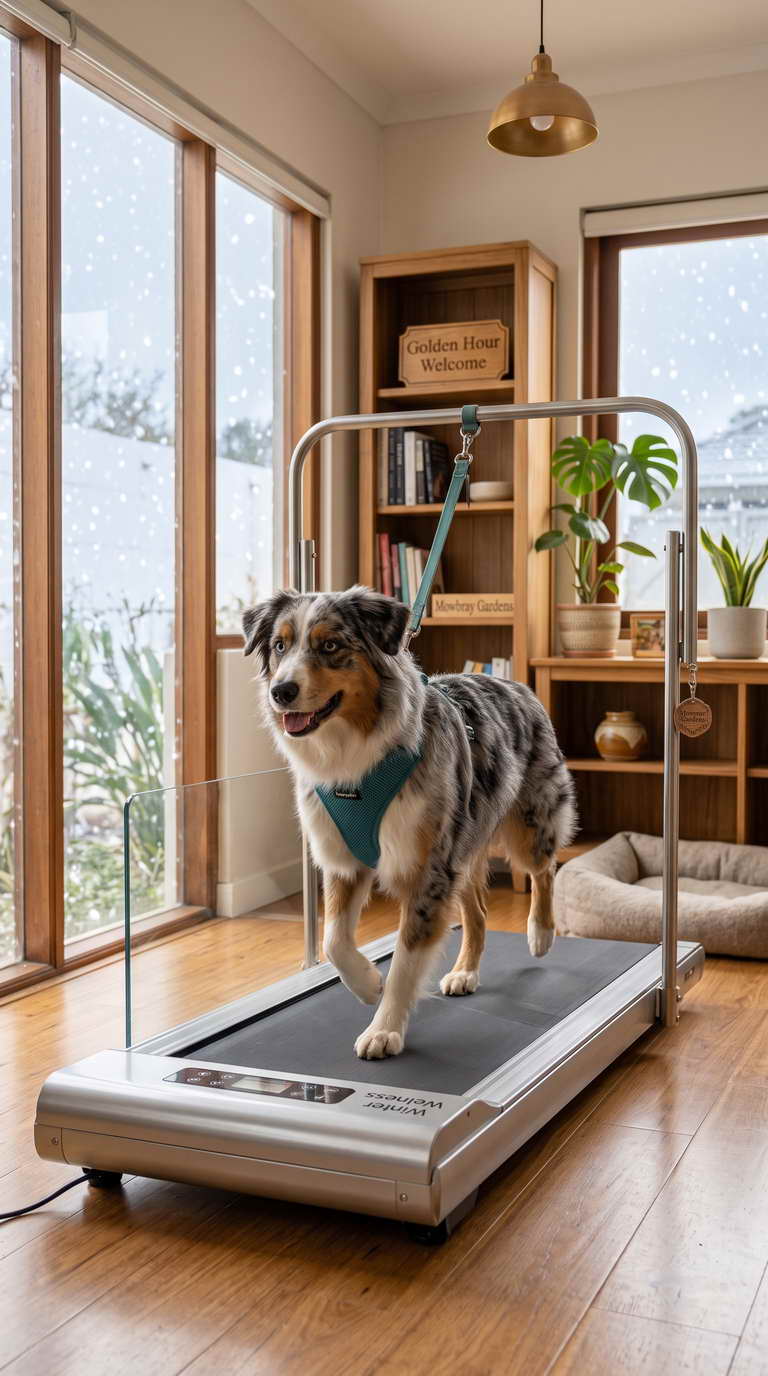
Quick Reference: Motorized Dog Treadmills vs. Manual Slatmills
Before investing in equipment, understand the two primary mechanical categories available for canine fitness:
| Mechanical Feature | Motorized Dog Treadmills (Electric) | Manual Slatmills / Dog Trotters |
| Power Source | Electric motor (Belt moves at set speed) | 100% Dog-powered (Freewheeling ball bearings) |
| Pace Control | Set manually by human via console/remote | Controlled naturally by dog’s foot speed |
| Safety Dynamics | Belt moves even if dog stops (requires safety key) | Stops immediately the instant the dog stops running |
| Running Surface | Continuous textured PVC / rubber belt | Heavy-duty wooden or aluminum individual slats |
| Noise Level | Whisper-quiet electric hum | Louder mechanical whirring from rotating bearings |
| Primary Use Case | Controlled rehabilitation, steady cardio, seniors | High-drive sprint conditioning, working breeds |
| Average Price Range | $500 – $1,200 | $1,000 – $2,500+ |
The Danger of Human Treadmills: Why Dogs Need Purpose-Built Gear
A common question pet parents ask is: “I already have a high-end Peloton or NordicTrack treadmill in my basement. Can’t I just walk my dog on that and save $800?”
Veterinary orthopedic surgeons and physical therapists strongly advise against using human treadmills for canines. The machines are engineered for upright bipeds, not low-slung quadrupeds:
                  ┌───────────────────────────────────────────────┐
                  │       Human vs. Canine Treadmill Dynamics     │
                  └───────────────────────┬───────────────────────┘
                                          │
         ┌────────────────────────────────┴────────────────────────────────┐
         ▼                                                                 ▼
┌─────────────────────────────────┐               ┌─────────────────────────────────┐
│       Human Treadmills          │               │       Dedicated Dog Treadmills  │
│ • Short track length (45-55 in) │               │ • Extended track (75-90+ inches)│
│ • Stride-cramping causes spinal │               │ • Accommodates full quadruped   │
│   compression and joint wear    │               │   trot without shortening stride│
│ • Open side gaps catch dog fur  │               │ • Solid side barrier walls      │
│ • Motor vents blow air in eyes  │               │ • Enclosed, pet-safe motor housing│
└─────────────────────────────────┘               └─────────────────────────────────┘
-
Track Length and Gait Distortion: When a dog runs or trots, their front paws reach forward while their rear legs extend far behind them. A human treadmill belt is built for the compact stride of an upright person. Placing a medium or large dog on a human treadmill forces them to shorten their natural stride, resulting in unnatural biomechanical hunching, accelerated patellar wear, and chronic lumbar spine compression.
-
Side Wall Protection: Dog treadmills feature solid, low-profile side panels. These walls prevent the dog from looking sideways, stepping off the edge of a moving belt, or getting their paws pinched in side rails.
-
Motor Housing and Airflow: On human treadmills, the drive motor sits directly at the front of the belt, venting warm air, carbon dust, and mechanical hums forward. For a dog running nose-down, this blows heated motor exhaust directly into their eyes and nostrils. Dedicated canine treadmills conceal the motor beneath sealed, shielded enclosures with rear-facing vents.
-
Low-Speed Gearing: Human treadmills are designed to accelerate smoothly between 2.5 and 10+ mph, but their low-speed gears are often jerky. Dog units feature specialized high-torque motors capable of maintaining an ultra-smooth, continuous crawl at 0.5 to 1.5 mph, which is essential for timid dogs and early rehabilitation.
5 Essential Features to Evaluate in a Dog Treadmill
When shopping for an indoor canine running machine, look past marketing claims and evaluate these functional criteria:
1. Running Deck Length (The Stride Formula)
The running surface must comfortably accommodate your dog’s maximum physical reach. Use this sizing calculation:
-
Measure your dog from the tip of their nose to the end of their outstretched rear paws while lying down in full extension.
-
The Rule: The treadmill running surface must be at least 1.5 to 2 times the length of your dog’s standing body length from chest to buttocks.
2. Emergency Tether Safety Key
Every electric dog treadmill must include a physical magnetic safety shut-off key. The safety lanyard clips gently to your dog’s chest harness (never to a neck collar). If the dog stumbles, drifts too far toward the rear of the belt, or attempts to hop off, the magnet detaches instantly, cutting electrical power to the belt within a split second.
3. Integrated Low-Profile Harness Bar
Look for models featuring an overhead bridge bar or side eye-bolts designed to anchor a harness lightly. This does not suspend the dog in the air; it simply prevents them from drifting into the side walls while keeping their attention focused straight ahead.
4. Whispering Decibel Levels
Dogs possess auditory sensitivity roughly four times greater than humans. Cheap electric motors emit high-pitched whining frequencies that can terrify sound-sensitive animals. Quality units (such as DogPacer or LifePro) utilize quiet DC motors that operate well under 55 decibels.
5. Incline Versatility
Mild incline adjustments (from 1.5% up to 8%) allow handlers to engage posterior kinetic chains, building hindquarter muscle mass and strengthening hamstrings without putting concussive impact on front carpal joints.
The Step-by-Step Training Blueprint: From Skeptic to Strider
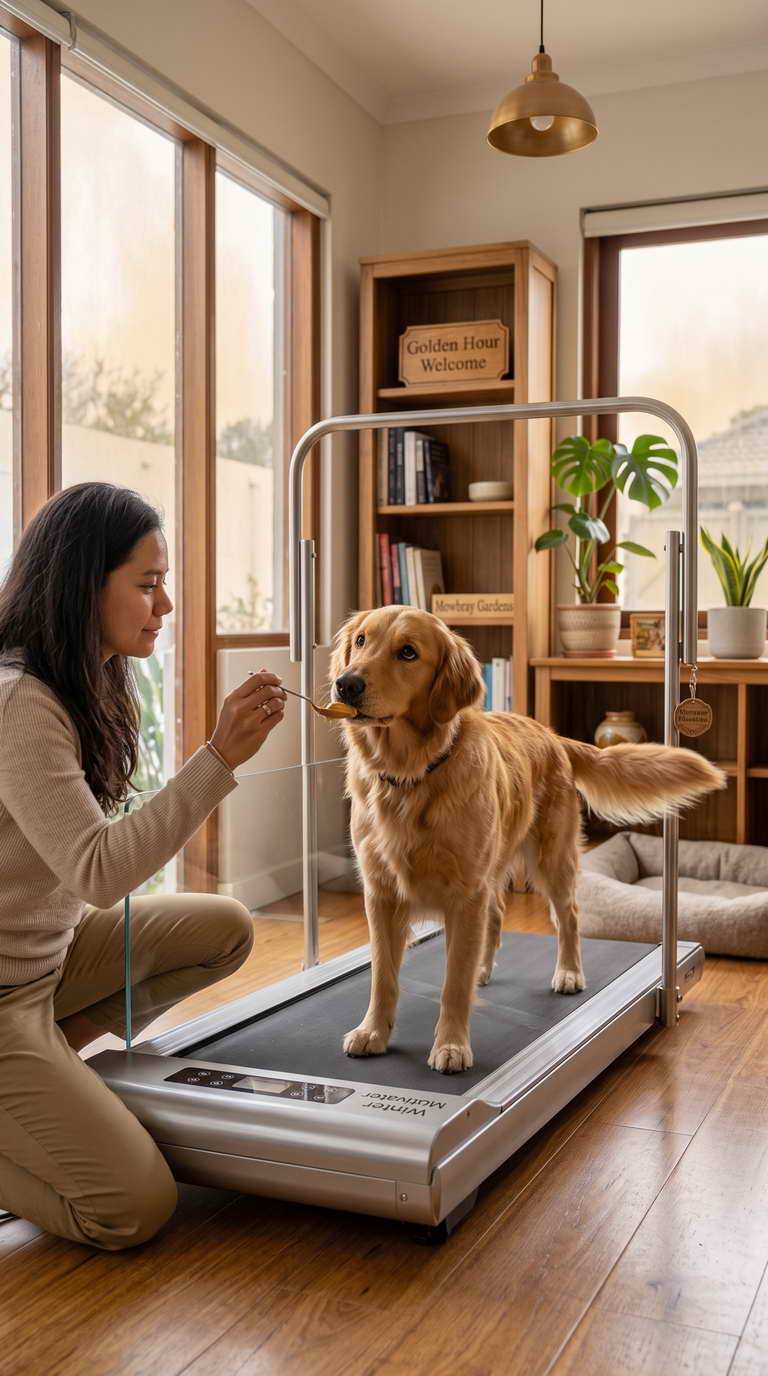
Never force a frightened dog onto a moving treadmill. Shoving an animal onto a humming machine will create permanent panic and aversion.
Follow this proven four-phase desensitization protocol, keeping sessions to five minutes once or twice daily:
Step 1: The Treat Runway ──► Step 2: Motor Acoustic Acclimation ──► Step 3: First Slow Steps ──► Step 4: Building Rhythm
Phase 1: The Treat Runway (Machine Powered OFF)
-
Place the unplugged treadmill in a bright, spacious room.
-
Scatter high-value treats (cooked roast chicken or freeze-dried liver) across the running belt.
-
Allow your dog to step on, eat, and step off freely without any restraint.
-
Reward them generously every time all four paws stand squarely on the platform. The goal is simple: Treadmill = Delicious Rewards.
Phase 2: Motor Acoustic Acclimation
-
Have an assistant sit with your dog five to ten feet away from the treadmill, feeding treats while keeping them relaxed.
-
Turn the treadmill on at its absolute lowest speed setting (0.5 mph) with no dog on the belt.
-
Let the motor run for two minutes while rewarding your dog for calm body language. This teaches the canine nervous system that the mechanical hum presents zero environmental threat.
Phase 3: The First Powered Steps (Manual Lure)
-
Put your dog in a supportive, secure chest harness.
-
Lead them onto the powered-down deck, standing straddled over the belt facing forward.
-
Start the belt on the slowest possible crawl (under 1.0 mph).
-
Hold a spoonful of peanut butter or a squeeze-treat pouch a few inches in front of their nose to encourage forward motion.
-
The moment they lift their front paws and coordinate their rear stride to match the moving surface, mark with “Yes!” and release food rewards continuously.
-
Limit this first moving session to 60 to 90 seconds maximum, ending on a triumphant, positive note.
Phase 4: Building Daily Aerobic Rhythm
-
Over two weeks, gradually lengthen sessions from 3 minutes to 15 or 20 minutes.
-
Slowly increase belt speed until your dog shifts from a sluggish walk into a balanced, natural, four-beat trot.
-
A steady trot is the ideal cardiovascular fitness zone: the spine remains level, breathing is rhythmic, and joint impact is gentle.
Who Benefits Most from Canine Treadmills?
While any dog can benefit from supplemental fitness, treadmills are exceptionally transformative for specific canine groups:
1. High-Drive Working and Sporting Breeds
Active working breeds—similar to those featured across our comprehensive overview of the most popular large dog breeds, such as German Shepherds, Labrador Retrievers, and Dobermans—possess working stamina that easily outpaces their owners. A 30-minute morning trot session burns through baseline kinetic arousal, leaving them relaxed throughout the workday.
2. High-Energy Companions in Busy Households
For households managing active school routines, where owners love having breeds recognized among the most popular dog breeds for families like Golden Retrievers or Standard Poodles, an indoor treadmill ensures the dog receives daily cardio even when soccer practice, rainstorms, or sick days disrupt the outdoor walking schedule.
3. Dogs Undergoing Weight Management & Rehab
Controlled treadmill walking eliminates outdoor variables like potholes, aggressive neighborhood dogs, and sudden stops. Under clinical veterinary guidance, low-speed walking helps obese dogs shed visceral fat without straining arthritic joints.
4 Critical Safety Rules: What You Must NEVER Do
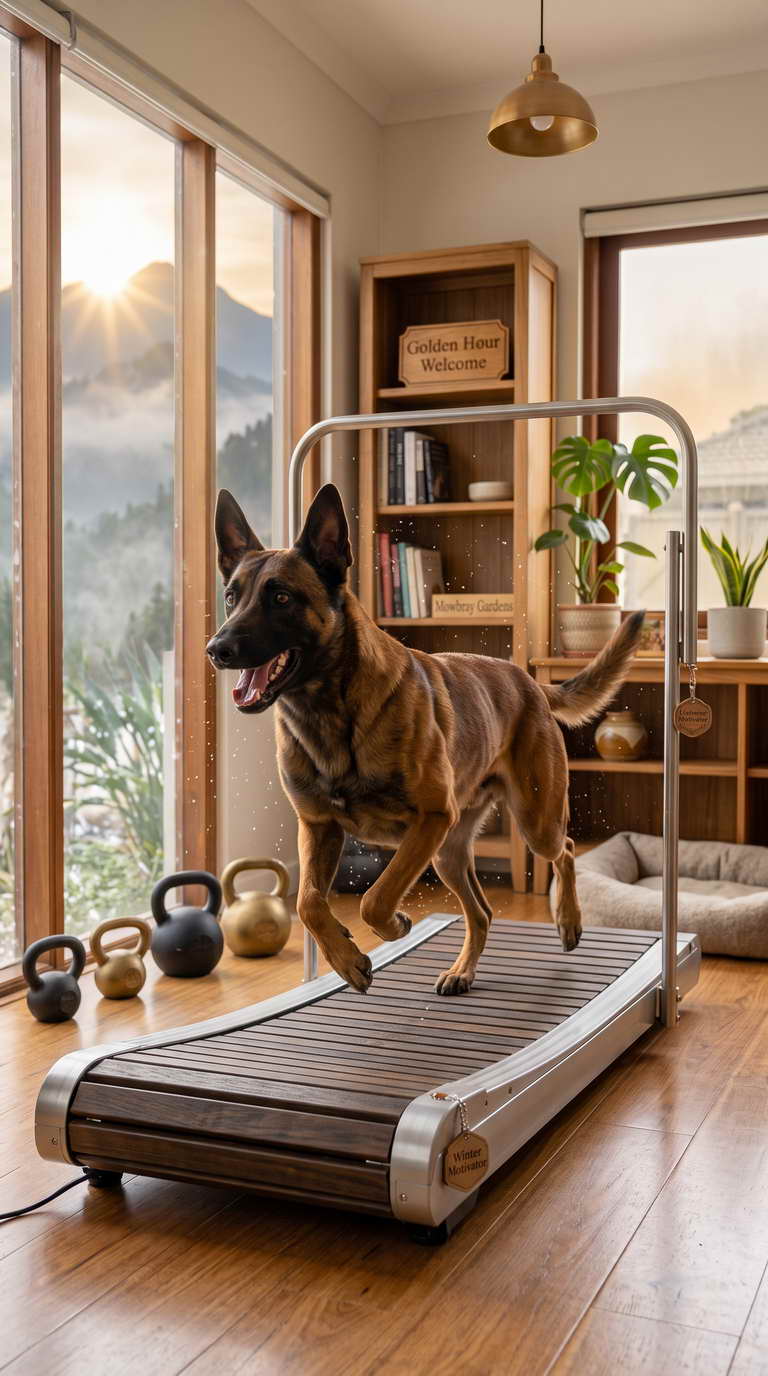
Even with top-tier equipment, human handling errors can lead to serious injuries:
Common Mistakes vs. Safe Operating Protocols:
❌ Tying a neck collar to the frame ──► Stumble creates strangulation or tracheal collapse
✔️ Fasten exclusively to chest harness ─► Distributes load across the sternum safely

❌ Walking away to do chores ────────► Dog can stumble, panic, or suffer friction burns
✔️ 100% active human supervision ─────► Stay within arm's reach for entire session

❌ Running a dog to exhaustion ──────► Causes heatstroke; dogs cannot signal overload
✔️ Monitor tongue, gait, and breathing ─► Stop at first sign of wide-spoon panting
-
Never Attach the Lead to a Neck Collar: If a dog trips while tethered by a neck collar, the moving belt will pull their legs backward while the frame suspends their neck, resulting in fractured cervical vertebrae or fatal tracheal collapse. Always use a broad, padded Y-shaped chest harness.
-
Never Leave a Dog Unattended: A treadmill is not an electronic babysitter. You must remain within arm’s reach throughout the entire exercise session to monitor posture, adjust belt speed, and provide water breaks.
-
Never Skip the Warm-Up and Cool-Down: Just like human athletes, canine muscles, tendons, and synovial joint fluid need gradual temperature transitions. Begin with three minutes of slow walking (1.0 to 1.5 mph), progress to an active trot, and conclude with three minutes of slow cool-down walking.
-
Mind the Caloric Balance: If you significantly increase your dog’s daily exercise volume with treadmill training, monitor their body condition score closely. Active sporting dogs may require higher dietary protein and fats from balanced diets detailed in our review of premium pet food brands to support muscle repair and joint lubrication.
Expert Recommendations: Veterinary Guidelines
According to physical therapy protocols established by the American Kennel Club (AKC), canine conditioning equipment should supplement—not completely replace—outdoor sensory walks. Outdoor walks provide vital olfactory mental stimulation through sniffing that a treadmill cannot recreate.
Additionally, canine sports medicine guidelines from the American Veterinary Medical Association (AVMA) remind pet parents that young puppies whose skeletal growth plates remain open (typically under 12 to 14 months of age) should never be subjected to sustained, repetitive forced trotting on motorized treadmills. Forced repetitive motion on immature joints increases the risk of developmental elbow dysplasia and cartilage damage.
Frequently Asked Questions (FAQ)
Can a dog treadmill replace daily outdoor walks?
No. A treadmill is an exceptional physical exercise supplement during extreme weather or busy schedules, but it cannot replace outdoor sniffing. For a dog, outdoor sniffing provides essential cognitive enrichment and decompression that keeps their mind satisfied. Use the treadmill for physical conditioning, and preserve outdoor walks for mental exploration.
How long should a dog stay on a treadmill per session?
Beginners should start with 3 to 5-minute sessions. Once conditioned, most healthy adult companion dogs thrive on 15 to 30 minutes of steady trotting per day, three to five times per week. Always provide access to fresh water immediately after their session.
Are manual slatmills better than electric motorized treadmills?
Neither is universally “better”; they serve different athletic goals. Manual slatmills allow high-drive dogs to sprint at full speed and stop whenever they choose, making them the premier choice for canine athletes and working protection breeds. Electric motorized treadmills provide precise, steady speed control, making them superior for weight loss, controlled rehabilitation, and anxious pets needing steady rhythms.
What should I do if my dog refuses to walk on the treadmill?
Never drag, push, or physically force a reluctant dog onto the belt. Drop back to Phase 1: feed their daily meals directly off the stationary, powered-down platform for a week. Rebuilding positive association through patience is the only sustainable path to training success.
Final Thoughts: A Year-Round Fitness Sanctuary
Investing in a dog treadmill is one of the most effective lifestyle upgrades an active pet parent can make.
By eliminating the barriers of sub-zero winter mornings, dangerous summer heatwaves, and packed work schedules, an indoor running deck ensures your companion receives the physical release their biology demands.
When approached with patience, structured harness safety, and positive reinforcement, your dog will come to view their treadmill sessions not as a chore, but as an exciting, rewarding outlet that keeps their body lean, their mind calm, and their tail wagging all year long.
About The Author

Leave a Reply