
Dog Barking Nonstop? What Finally Worked for My Lab, Koffie
By Julia Perez
Dog Mom to Koffie & Founder of Petsidi
There is a very specific kind of panic that hits when you are in the middle of a quiet afternoon—maybe trying to answer a phone call or just drink your coffee in peace—and your dog suddenly decides the Amazon driver is a mortal enemy.
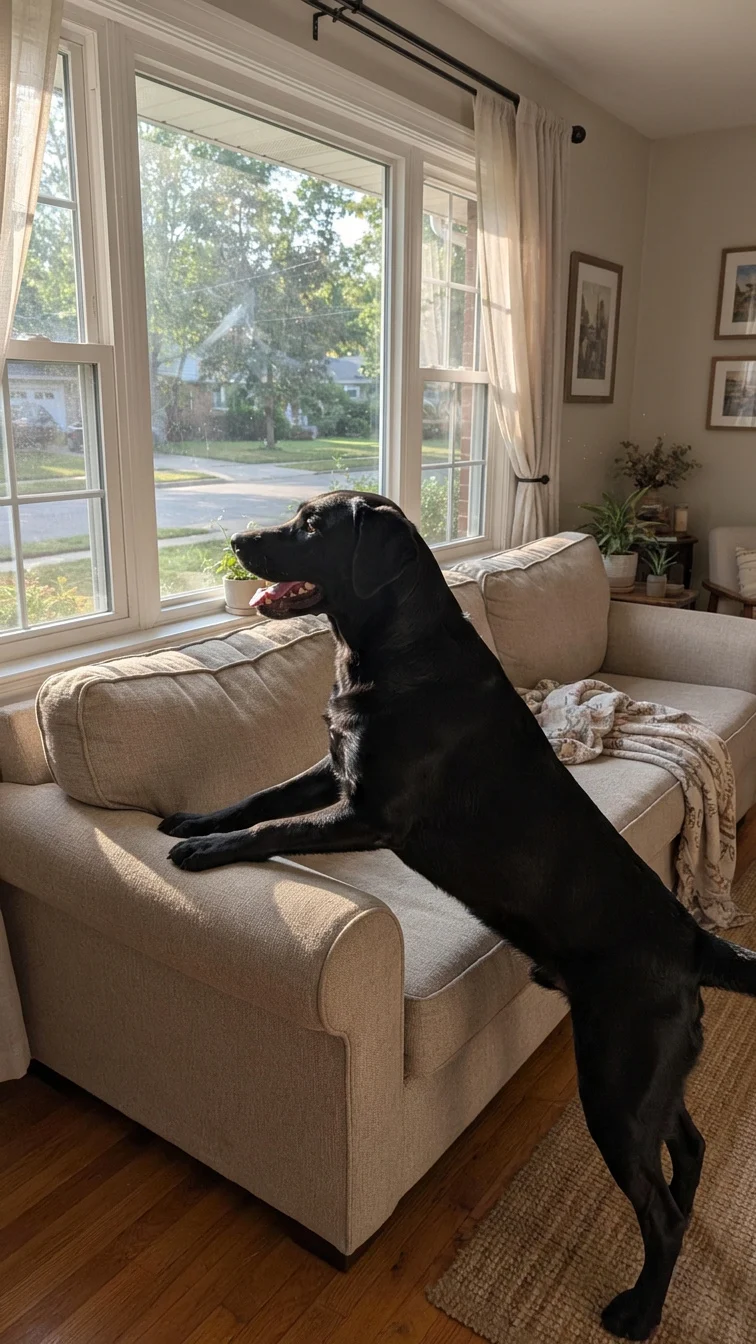
My 2-year-old Black Lab, Koffie, is usually a big, goofy sweetheart. Most of the time, he just wants belly rubs and a nap. But the second he hears the rumble of a delivery van turning onto our street, a switch flips. He scrambles onto the back of the living room couch, smashes his nose against the glass, and lets out this deep, echoing BOOF! BOOF! BOOF! that practically rattles the windows.
For months, I did what pretty much every frustrated dog owner does. I’d yell, “Koffie! Quiet! Knock it off!” from the kitchen. And every single time, he’d glance back at me, wag his tail, and bark even louder.
Dealing with constant dog barking is exhausting, especially when you start feeling that awkward guilt about what the neighbors must think. It took me a while to realize that I wasn’t actually communicating with him—I was just adding to the noise. Once I changed how I reacted, things finally started to calm down.
Here is what actually worked for us, why yelling backfired, and the simple tweaks that saved my sanity.
A Quick Note Before We Dive In:
I’m sharing what worked for me and Koffie based on years of living with dogs and researching positive training, not as a licensed veterinarian. These tips are great for everyday alert, boredom, and demand barking. However, if your dog suddenly starts barking out of nowhere, seems frantic, or is destroying things out of panic, it could be pain or severe separation anxiety—definitely check in with a certified trainer or your local clinic.
Why Yelling “Quiet!” Just Makes It Worse
Before I could get Koffie to stop patrolling the living room window, I had to break my own bad habit.
When a dog barks at a stranger walking past the house, they think they are doing you a huge favor by sounding the alarm. So when I yelled “Koffie, stop!” from across the room, he didn’t hear a command to settle down. In dog language, he heard me barking right along with him.
I was basically joining his chorus and confirming that the mail carrier really was a massive threat. No wonder he kept going.
Figuring Out What Your Dog Is Actually Trying to Say
You can’t train a dog to never bark, and honestly, you shouldn’t want to. Barking is just how they talk. The trick is figuring out why they are talking so you know how to answer.
-
The “Someone’s Outside!” Bark: Loud, rhythmic, and usually aimed at the front door or window. This was Koffie’s favorite hobby.
-
The “I’m Bored” Bark: Repetitive, flat barks with little pauses in between. If it’s raining and we skip our walk, Koffie will literally stand in the hallway and bark at nothing just to see if I’ll get up.
-
The “Pay Attention to Me” Bark: Short, sharp, and directed straight at your face. Usually translates to “throw the ball” or “my dinner is four minutes late.”
-
The Discomfort Bark: If a normally quiet dog suddenly starts whining or barking when they move or get touched, don’t brush it off as stubbornness. Sometimes they are just hurting—kind of like when a dog keeps shaking head nonstop because of a hidden ear infection.
As the ASPCA points out, slapping a shock collar or citronella spray on a barking dog without fixing the reason behind it usually backfires. It can make them anxious, fearful, or cause them to take that stress out by chewing up your furniture instead.
The 3 Things That Actually Quieted Our Living Room
Once I stopped yelling and started looking at the situation from Koffie’s point of view, I put together a simple routine. It didn’t work overnight, and there were definitely messy days, but within a few weeks, the difference was huge.
1. Block the View (Seriously, Do This First)
Think about it from your dog’s perspective: the mail truck pulls up, your dog barks like crazy, and thirty seconds later, the truck drives away. In your dog’s mind, they just saved the house. Barking worked!
Because it’s so rewarding for them, the easiest first step is to stop them from practicing the habit. I grabbed a cheap roll of static-cling frosted window film and put it across the bottom half of our front window. We still get all the natural sunlight, but Koffie can’t sit on the sofa and stare at every dog walker or delivery truck that passes by. Honestly, just blocking his view cut his daily barking in half almost immediately.
2. Walk Over, Say “Thanks,” and Redirect
When Koffie does hear a knock or a car door slam and lets out a bark, I don’t shout from the other room anymore. I calmly get up, walk over to the window, glance outside, and say in a totally boring voice, “Thanks, Koffie. I got it.”
Then, I give him something else to do—usually asking him to go lie down on his bed a few feet away. The second his elbows hit the bed, he gets a treat.
It’s the exact same mindset you need when you’re figuring out how to stop puppy biting feet when walking. Just telling a dog “no” leaves them confused; giving them a clear, rewarding job to do instead actually solves the problem.
3. Teach “Quiet” Using Their Nose
You can’t expect a dog to know what “quiet” means if you only say it when you’re annoyed.
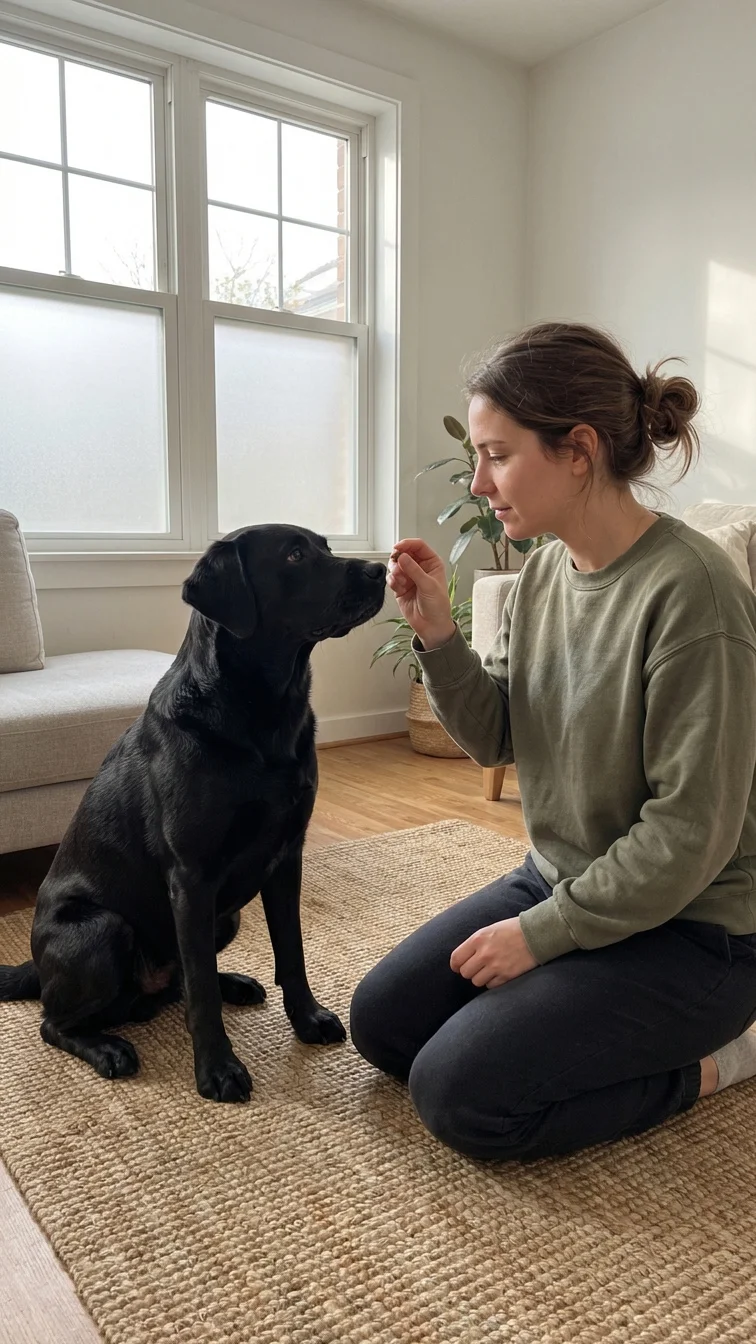
To teach Koffie, I waited for a calm afternoon and knocked on the coffee table myself to trigger a couple of barks. The very second he paused to take a breath, I held a really smelly treat right in front of his nose. Here’s a great little dog hack: a dog physically cannot sniff and bark at the same time.
The moment his mouth closed to sniff the treat, I said “Quiet,” waited two seconds, and gave it to him. After a couple of weeks of practicing this for five minutes a day, he finally connected the word to closing his mouth. The American Kennel Club (AKC) also notes that everyone in the house has to stay on the same page—if one person ignores demand barking while someone else tosses a ball just to make them stop, the habit will stick around forever.
Fixing the “I’m Bored” Barks
At two years old, Koffie still has a ton of energy. If I’m stuck at my desk all morning and he hasn’t had a chance to run around, he is going to make his own fun—usually by barking at a leaf blowing across the yard.
On days when we can’t make it to the park, mental workouts are a lifesaver. Sniffing and chewing tire dogs out way faster than you’d think. I’ll smear a little peanut butter on a frozen lick mat, scatter his kibble in a snuffle mat, or hand him a sturdy natural rubber chew from my go-to eco friendly pet products. It keeps his brain busy and his mouth occupied for a solid 40 minutes while I get work done.
Living with a vocal dog doesn’t mean you have to live with a permanent headache. Koffie isn’t a robot—he still lets out a polite little woof when someone actually knocks on the front door, which I honestly don’t mind at all. The difference now is that once I say “I got it,” he actually listens, hops off the couch, and goes right back to his nap.
About The Author

Leave a Reply