
Dog Throwing Up Yellow Foam? My Experience & Simple Bedtime Fix
By Julia Perez
PETSIDI – Canine Care Advocate & Dog Mom to Koffie
At 5:30 AM on a Tuesday, I was jolted awake by a sound every pet parent dreads: the rhythmic, deep-chested heave, heave, HUK echoing from the foot of my bed.
I scrambled out from under the covers just in time to watch my 2-year-old Black Lab, Koffie, deposit a puddle of frothy, bright yellow foam right onto the bedroom rug. After he finished, he looked up at me, wagged his tail, and trotted off to the kitchen looking for breakfast as if absolutely nothing had happened.
I was baffled. Koffie has the digestive constitution of a garbage truck. If you have ever lived with a Labrador, you know they are generally unfazed by what they eat. But over the next two weeks, this yellow foam incident happened three more times, always right before sunrise.
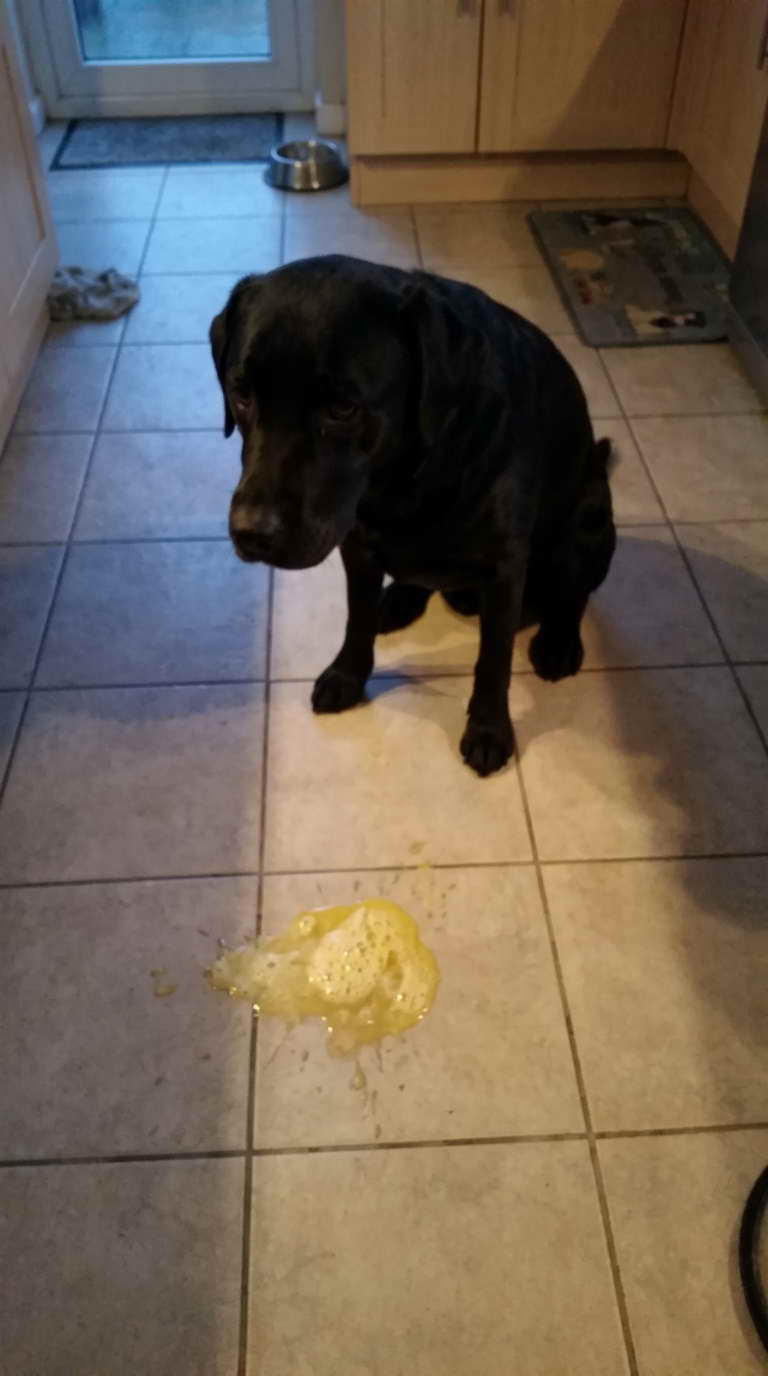
When your dog vomits, it is completely normal to panic. But once I understood exactly what that yellow liquid was and why Koffie’s stomach was rejecting it at dawn, the solution turned out to be incredibly simple—no expensive medications required.
If you are constantly waking up to your dog throwing up yellow liquid, here is what my experience with Koffie taught me, what the research says about it, and the easy routine tweak that stopped my morning cleanup duty for good.
Author’s Medical Disclaimer:
I am a passionate dog advocate and experienced pet parent, not a licensed veterinarian. A single episode of yellow foam is usually harmless, but if your dog is lethargic, refusing water, or throwing up continuously, please consult your vet immediately. The first-hand experiences and routine changes shared below are for educational purposes regarding mild, routine bile reflux.
Decoding the Yellow Foam: What Exactly Is It?
When I first inspected the puddle on the rug, I was terrified it was something toxic. But that bright neon-yellow, slimy, frothy liquid is actually a completely natural bodily fluid: bile.
Bile is a highly acidic digestive fluid produced by your dog’s liver and stored in the gallbladder. Its main job is to break down fats and aid in digestion when food enters the small intestine.
Normally, bile stays put in the intestinal tract. But when a dog throws up yellow foam, it means bile has leaked backward from the small intestine into the empty stomach. Because the stomach is completely empty of food, the highly acidic bile irritates the stomach lining, causing nausea and forcing the dog to throw it back up.
The Culprit: Bilious Vomiting Syndrome (BVS)
After a quick consultation with our clinic, Koffie was diagnosed with a very fancy-sounding but easily manageable condition: Bilious Vomiting Syndrome (BVS).
Essentially, BVS is “empty stomach syndrome.”
I looked at Koffie’s feeding schedule and immediately saw the problem. I was feeding him dinner at 5:00 PM and breakfast at 7:30 AM. That meant his stomach was sitting completely empty for over 14 hours every single night.
Dogs have incredibly strong stomach acids. When their stomach is empty for that long, the acid and bile build up. The stomach essentially gets “bored” and irritated by its own juices, triggering an early morning vomiting reflex. Koffie wasn’t sick; he was just dealing with extreme morning acid reflux.
This is a very specific type of morning sickness. It is completely different from a situation where a dog keeps throwing up undigested kibble or foreign objects throughout the day, which usually points to a mechanical blockage or acute illness. According to clinical gastrointestinal guidelines provided by VCA Animal Hospitals, Bilious Vomiting Syndrome is most commonly seen in younger dogs and is characterized by vomiting bile exclusively late at night or early in the morning, immediately followed by a totally normal appetite.
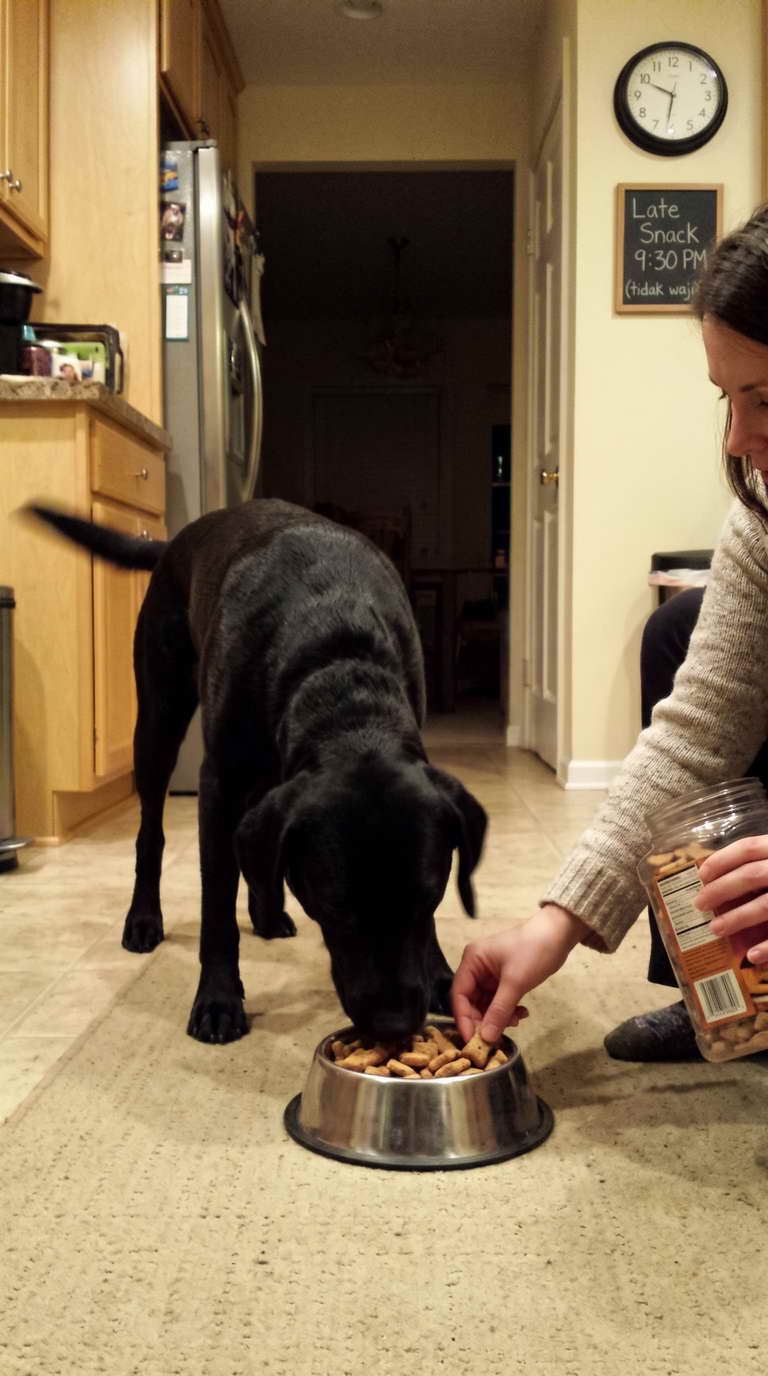
My Fix: The “Late-Night Snack” Hack
The prescription to cure Koffie’s morning sickness didn’t come in a pill bottle. It came from the pantry.
To stop the bile from irritating his stomach lining, I needed to give his stomach acid something to digest overnight.
Here is the exact routine change I made:
-
The Bedtime Biscuit: Right before I turn off the lights to go to bed (around 10:30 PM), I give Koffie a small, high-protein snack.
-
What I Feed: I usually give him half a handful of his regular dry kibble, or a small piece of plain, boiled chicken breast.
-
The Result: The food absorbs the excess bile overnight.
Since the very first night I started giving Koffie his bedtime snack, he has not thrown up yellow foam once. His stomach stays settled, and I get to sleep through the night without hearing that awful retching sound. I also made sure to serve his meals in a sturdy, food-grade stainless steel bowl rather than cheap plastic, following the safety principles we look for in reliable eco friendly pet products, ensuring no toxic dyes or chemicals were upsetting his stomach.
When Yellow Foam is NOT Just an Empty Stomach
While Koffie’s issue was a simple empty-stomach fix, throwing up bile can sometimes be a red flag for something more sinister. Because Labradors explore with their mouths, I always have to be hyper-vigilant.
For instance, if Koffie had been playing in the garden and accidentally swallowed a stinging insect, the yellow vomit could have been a systemic allergic reaction to a dog stung by bee incident.
You should immediately abandon the “bedtime snack” theory and head to the veterinary clinic if your dog exhibits any of these symptoms alongside the yellow vomit:
-
Lethargy and Depression: Koffie was bouncing off the walls after vomiting. If your dog refuses to get up or looks deeply depressed, it is a medical emergency.
-
Loss of Appetite: A dog with BVS will happily eat breakfast immediately after vomiting. A dog with a dangerous intestinal blockage will refuse food.
-
Frequency: Vomiting yellow foam once in the morning is one thing. Heaving yellow foam five times in two hours means a trip to the emergency room.
The American Kennel Club (AKC) emphasizes that if the yellow vomit is accompanied by a swollen, rock-hard abdomen and unsuccessful pacing, it could be a sign of deadly Gastric Dilatation-Volvulus (Bloat), which requires emergency surgery within minutes.
Waking up to clean a yellow puddle off the floor is never how anyone wants to start their day. But learning the biological rhythm of your dog’s digestion makes a world of difference.
If your dog is otherwise completely healthy, playful, and hungry, try shifting their dinner time an hour later, or introduce a small bedtime snack. For Koffie, a tiny handful of kibble at 10 PM was the magic cure that kept his stomach happy and my rugs completely clean.
About The Author

Leave a Reply