
Dog Keeps Throwing Up: Causes, Color Decoder, and When to Seek the Vet
PETSIDI – It is 3:00 AM, and you are jolted awake from a sound sleep by one of the most dreaded sounds in the pet parent universe: heave… heave… HUK.
You leap out of bed and scramble across the dark room, desperate to steer your dog off your antique living room rug and onto the clean tile before the inevitable puddle appears. You clean up the mess, stroke your companion’s trembling head, and hope that was the end of it.
Two hours later, it happens again. And then again after sunrise.
A single, isolated vomiting episode is a relatively common canine occurrence—often dubbed the “garbage gut” syndrome after an inquisitive pup raids an open trash can or swallows too much backyard lawn grass.
However, when a dog keeps throwing up repeatedly throughout the day, that initial casual mess transforms into an alarming medical crisis.
Is your companion suffering from simple acid reflux, an abrupt food allergy flare-up, or a life-threatening intestinal obstruction from a swallowed squeaker? More importantly, at what exact point does home observation become a dangerous gamble that demands an immediate run to the nearest emergency veterinary hospital?
Here is your comprehensive, veterinarian-informed guide to evaluating a vomiting canine—covering the vital difference between vomiting and regurgitation, an actionable vomit color decoder, dangerous red flags, and safe, step-by-step home stabilization protocols.
Quick Reference: The Canine Vomit Color Decoder
The physical color, texture, and timing of what your dog expels offer invaluable clinical clues for your veterinary team. Use this diagnostic breakdown to interpret what you are seeing:
| Vomit Appearance | Primary Biological Cause | Clinical Urgency Level | What It Usually Means |
| Yellow / Foamy Liquid | Pure bile accumulation | Low – Moderate | Empty stomach; Bilious Vomiting Syndrome; morning bile reflux |
| Clear / White Frothy Foam | Saliva, excess gastric acid, or air swallowing | Moderate | Gastric irritation, kennel cough retching, drinking water too fast |
| Bright Red / Fresh Blood | Active bleeding in esophagus or stomach lining | 🚨 High Emergency | Severe gastric ulcers, rodenticide poisoning, sharp foreign body |
| Dark “Coffee-Grounds” | Digested blood (hematemesis) | 🚨 Critical Emergency | Deep internal stomach ulceration, severe intestinal wall trauma |
| Green / Dark Green Fluid | Fresh bile or toxic plant matter | High | Duodenal fluid reflux, rodent bait ingestion, toxic yard flora |
| Undigested Kibble (Cylinder shape) | Esophageal regurgitation | Moderate | Swallowing food without chewing, megaesophagus, early esophageal blockage |
| Foul Fecal-Smelling Brown Fluid | Lower intestinal backup | 🚨 Critical Emergency | Complete mechanical bowel obstruction; medical emergency |
Vomiting vs. Regurgitation: A Vital Clinical Distinction
Before calling your veterinarian, you must determine whether your dog is actually vomiting or merely regurgitating. In human conversation, we use these words interchangeably, but to a clinician, they represent entirely different physiological mechanisms occurring in completely separate organs:
                  ┌───────────────────────────────────────────────┐
                  │          Vomiting vs. Regurgitation           │
                  └───────────────────────┬───────────────────────┘
                                          │
         ┌────────────────────────────────┴────────────────────────────────┐
         ▼                                                                 ▼
┌─────────────────────────────────┐               ┌─────────────────────────────────┐
│        True Active Vomiting     │               │       Passive Regurgitation     │
│ • Active abdominal retching     │               │ • Sudden, effortless expulsion  │
│ • Drooling, nausea, pacing      │               │ • Zero abdominal contraction    │
│ • Expels digested, acidic matter│               │ • Tube-shaped, undigested food  │
│ • Originates in stomach/intestine│              │ • Originates in esophagus/throat │
└─────────────────────────────────┘               └─────────────────────────────────┘
1. True Active Vomiting
Vomiting is an active, coordinated reflex governed by the vomiting center in the brain’s medulla oblongata.
-
The Warning Signals: Your dog appears anxious, paces relentlessly, swallows hard, drools profusely (hypersalivation), and licks their lips.
-
The Physical Effort: The abdominal muscles forcefully contract and heave like an accordion to propel stomach contents upward against gravity.
-
The Output: The fluid contains partially digested food, bile, and gastric juices with a distinct acidic smell.
2. Passive Regurgitation
Regurgitation is completely effortless and passive.
-
The Presentation: Your dog is walking or standing calmly, lowers their head, and suddenly food slides out onto the floor without warning, heaving, or retching noises.
-
The Output: The food is typically undigested, intact, covered in clear, slimy mucus, and often retains the tubular cylindrical shape of the esophagus. Regurgitation indicates an issue with the esophagus (such as megaesophagus or a physical foreign body wedged near the throat), rather than an upset stomach.
6 Common Reasons Why Your Dog Keeps Throwing Up

When true repeated vomiting occurs, canine digestive pathology generally falls into one of six biological categories:
1. Dietary Indiscretion (“Garbage Gut”)
By nature, dogs are opportunistic scavengers. Ingesting rotting table scraps, moldy compost, dead wildlife, rancid grease, or sudden novel foods triggers acute gastroenteritis—a painful inflammation of the gastric and intestinal lining.
2. Foreign Body Obstruction (The Surgical Nightmare)
Canines, particularly young and mouthy pups, explore their environments orally. Unsupervised chewing can lead to swallowing socks, peach pits, corn cobs, tennis ball chunks, or plastic toy pieces.
If this object wedges tightly in the pylorus (the stomach exit) or the small intestine, food and liquid cannot pass. The body attempts to clear the physical blockage through violent, repeated vomiting. An unresolved foreign body obstruction can rapidly cut off blood flow, leading to tissue necrosis, intestinal rupture, and fatal septic peritonitis.
3. Abrupt Food Transitions and Ingredient Reactions
Switching your dog’s dry kibble overnight without a proper seven-day transition period frequently shocks the intestinal microbiome, resulting in sudden vomiting and explosive diarrhea.
Furthermore, feeding ultra-cheap commercial brands packed with unverified generic meat meals can spark severe food intolerances. Evaluating evidence-backed formulas detailed across our guide to premium pet food brands helps ensure your companion receives clean, bioavailable proteins that support digestive stability.
4. Acute Pancreatitis
The pancreas produces vital digestive enzymes. If a dog consumes high-fat human foods (such as bacon grease, sausage patties, or buttered steak trimmings), the pancreas becomes severely inflamed. Enzymes activate prematurely inside the pancreatic tissue itself, essentially digesting the organ from the inside out. Pancreatitis produces unrelenting, agonizing vomiting, severe dehydration, and an arched-back posture (the praying position).
5. Ingestion of Environmental Toxins
Repeated acute vomiting is the body’s emergency physiological mechanism to purge ingested poisons:
-
Human Pharmaceuticals: NSAIDs (Ibuprofen, Aleve), Acetaminophen (Tylenol), and antidepressants.
-
Household & Yard Hazards: Antifreeze (ethylene glycol), rodent poisons, toxic ornamental plants (sago palm, lilies), cocoa mulch, and xylitol (birch bark sweetener).
6. Systemic Organ Failure & Chronic Disease
When the kidneys or liver fail, they lose the ability to filter metabolic waste products from the bloodstream. Blood urea nitrogen (BUN) and creatinine spike, circulating back through the brain to trigger chronic, unrelenting nausea and vomiting. Diabetic ketoacidosis, Addison’s disease, and heavy parasitic infestations also manifest as chronic gastrointestinal distress.
Red Flags: When to Rush to the Emergency Vet Immediately
Not every vomiting dog needs a midnight trip to an emergency clinic, but certain clinical presentations demand zero hesitation.
According to urgent triage protocols published by the American Veterinary Medical Association (AVMA), you must transport your dog to an emergency hospital immediately if you observe:
Emergency Triage Checklist:
🚨 Non-Productive Retching: Repeatedly heaving violently, but nothing comes up except white foam.
🚨 Abdominal Distension: Swollen, drum-tight, rock-hard abdomen (Classic sign of Gastric Torsion/GDV).
🚨 Extreme Lethargy: Dog is unable to stand, stumbles disoriented, or is unresponsive.
🚨 Pale, White, or Tacky Gums: Indicates circulatory shock, internal hemorrhage, or severe dehydration.
🚨 Projectile Blood: Bright red blood or dark coffee-ground sediment filling the vomit pool.
🚨 Suspected Foreign Body: You know the dog chewed and swallowed a sock, toy, or needle.
🚨 Frequency: Dog vomits more than 3 times in a single 2-hour window.
The Special Danger for Large Breeds: GDV (Bloat)
If you care for deep-chested, muscular working companions—such as the noble canines highlighted across our guide to the most popular large dog breeds, including German Shepherds, Great Danes, and Dobermans—unsuccessful retching paired with a hard, distended belly is the classic hallmark of Gastric Dilatation-Volvulus (GDV).
The stomach fills with gas and twists along its axis, cutting off vena cava blood flow to the heart. Without emergency surgical detorsion within two hours, GDV is virtually 100% fatal.
Step-by-Step Home Care Protocol for Mild, Stable Cases
What should you do if your dog threw up twice, but remains alert, responsive, wags their tail, and has normal pink gums? You can initiate a conservative 24-hour home stabilization protocol.
Step 1: 4-Hour Gut Rest ──► Step 2: Ice Chip Hydration ──► Step 3: Bland Diet Reset ──► Step 4: Slow Kibble Return
Step 1: The 4-to-6-Hour “Gut Rest” Window
When stomach tissue is inflamed, putting more solid food or large bowls of water into the belly immediately stimulates another round of vomiting.
-
Remove all food dishes completely for 4 to 6 hours (do not fast young puppies under 12 weeks for more than 2 hours due to hypoglycemia risks).
-
Let the gastric mucosal lining rest and cool down.
Step 2: The Hydration Ice-Chip Test
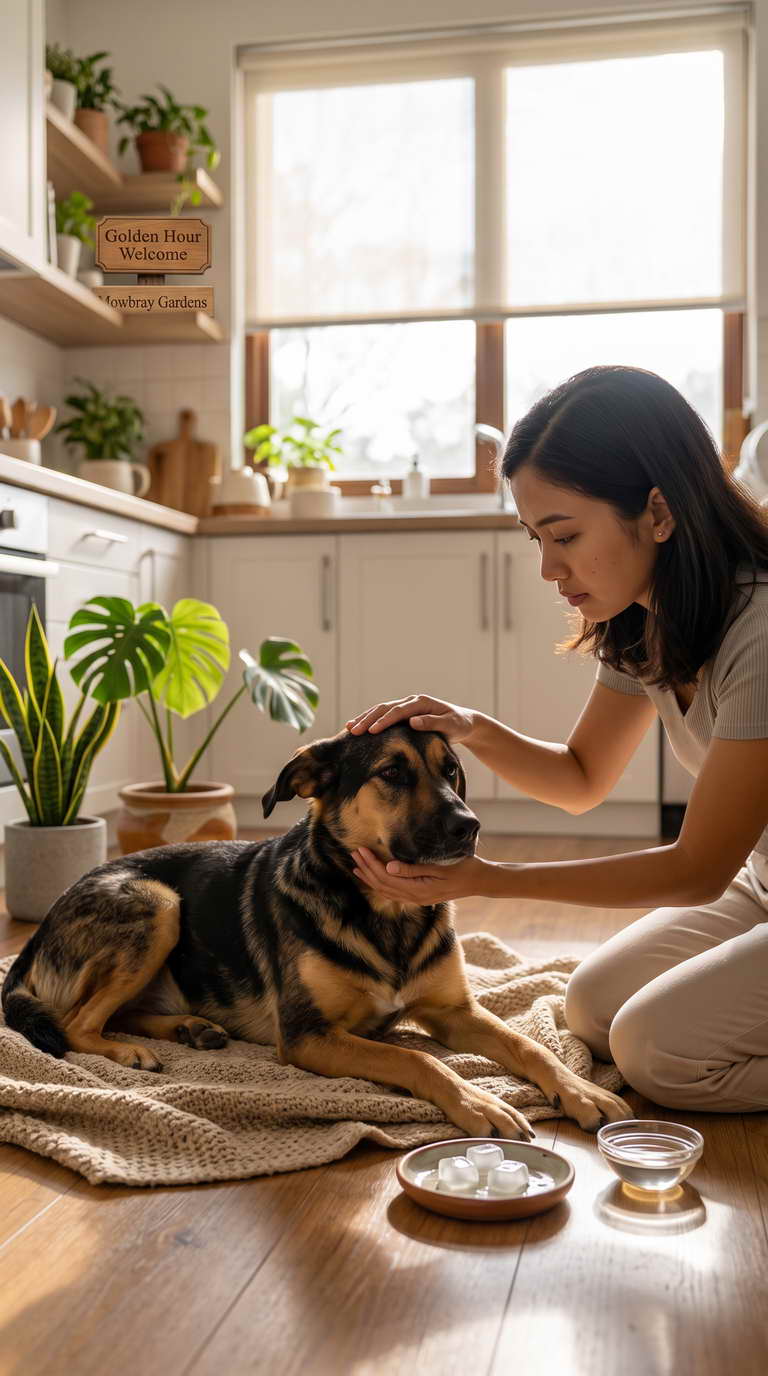
Dehydration is the true silent killer during vomiting episodes, but chugging a massive bowl of cold water will instantly distend the stomach and trigger another heave.
-
Do not leave an open water bowl.
-
Offer two or three ice cubes or a single tablespoon of water every 30 to 45 minutes.
-
If the dog keeps ice chips down successfully for three consecutive hours without vomiting, you can gradually allow small, controlled sips of room-temperature water.
Step 3: The 3-Day Veterinary Bland Diet
Once your dog has gone six to eight hours without a single vomiting episode, introduce tiny portions of an ultra-bland, low-fat meal.
-
The Gold Standard Recipe: 2 parts boiled white starches mixed with 1 part boiled, skinless, shredded chicken breast (or 90% lean boiled ground turkey), completely drained of all fat.
-
Understanding why veterinarians rely on starches and whether can dogs eat plain white rice every day will help you leverage white rice safely as a temporary 72-hour gastrointestinal reset without unbalancing their long-term nutrition.
-
Feed 2 to 3 small tablespoons every four hours. Do not serve a giant normal meal.
Step 4: The Gradual Return to Normal Food
If your dog remains vomit-free for 48 hours on the bland diet, begin slowly re-introducing their standard commercial kibble:
-
Day 1: 75% bland chicken/rice + 25% regular kibble.
-
Day 2: 50% bland chicken/rice + 50% regular kibble.
-
Day 3: 25% bland chicken/rice + 75% regular kibble.
-
Day 4: 100% regular kibble.
What NEVER to Do When Your Dog Is Throwing Up
Well-meaning pet owners often cause catastrophic medical complications by applying human medical habits to canines:
Deadly Home-Care Mistakes:
❌ Giving Human Pepto-Bismol / Aspirin ──► Contains salicylates that cause canine stomach bleeding
❌ Forcing Hydrogen Peroxide blindly ────► Corrosive foaming induces severe chemical gastritis
❌ Offering Rich Chicken Broth ─────────► High sodium & fat triggers acute pancreatitis
❌ Leaving Full Water Bowls Out ────────► Triggers immediate cyclic gastric expansion & vomiting
-
Never Administer Over-the-Counter Human Medications: Medications containing bismuth subsalicylate (Pepto-Bismol) can cause toxic stomach ulcerations and internal bleeding in canines. Never administer human antacids or anti-nausea pills without specific veterinary dosage instructions.
-
Never Force Hydrogen Peroxide at Home Without Clear Veterinary Direction: While 3% hydrogen peroxide is used to induce vomiting in specific poison emergencies, doing so blindly when an unknown substance or sharp foreign object is swallowed can cause esophageal perforations or severe chemical ulceration. Always call the ASPCA Animal Poison Control Center or your local vet first.
The American Kennel Club (AKC) stresses that if a dog cannot keep down tiny sips of water for more than 12 to 24 hours, clinical intravenous (IV) fluid therapy is mandatory to prevent hypovolemic shock and acute renal failure.
What to Expect at the Veterinary Clinic
If home stabilization fails and you visit your vet clinic, having an organized mental record speeds up life-saving diagnostics:
The Veterinary Diagnostic Cascade:
1. Physical Palpation: Feeling the abdomen for pain, hard masses, or fluid distension.
2. Full Abdominal Radiographs (X-Rays): Checking for metal, bone fragments, or trapped gas loops.
3. Serum Chemistry & CBC: Evaluating liver enzymes, kidney values, electrolytes, and lipase.
4. Abdominal Ultrasound: Visualizing intestinal wall thickness, foreign bodies, and pancreatic swelling.
Your vet will likely administer an injectable anti-emetic like Cerenia (Maropitant citrate), which blocks substance P in the brain’s emetic center, stopping vomiting within 45 minutes so systemic therapies can begin working safely.
Frequently Asked Questions (FAQ)
Why is my dog throwing up yellow liquid foam in the morning?
This is almost universally Bilious Vomiting Syndrome (BVS). When a dog’s stomach remains empty for long stretches overnight (such as 10 to 12 hours between dinner and breakfast), digestive bile backs up from the small intestine into the empty stomach, irritating the mucosal lining. The solution is simple: give your dog a small, high-protein bedtime biscuit or half a cup of food right before lights out to keep bile occupied overnight.
Can a dog throw up from stress or anxiety?
Yes. Acute emotional distress—such as severe thunderstorm phobias, separation anxiety, or long car rides (motion sickness)—triggers sudden adrenaline and cortisol surges that disrupt normal gastrointestinal motility, causing rapid stomach emptying and vomiting.
How can I tell if my dog is dehydrated from throwing up?
Check your dog’s skin turgor and capillary refill time. Gently pinch the loose skin along the back of their neck into a tent and release it. In a well-hydrated dog, the skin snaps back instantly in under a second; in a dehydrated dog, the skin stays peaked and recedes sluggishly. Additionally, press your finger firmly against their pink gums: the white spot should turn healthy pink again within two seconds.
Is it normal for a puppy to throw up undigested food right after eating?
Young puppies frequently inhale their meals in thirty seconds flat without chewing. This rapid gulping swallows air and expands the stomach rapidly, triggering immediate regurgitation. Using a slow-feeder puzzle bowl or spreading their kibble across a baking sheet forces them to eat grain by grain, resolving the issue instantly.
Final Thoughts: Balancing Calm Observation with Quick Action
Discovering that your dog keeps throwing up is an unnerving experience for any pet parent.
The secret to navigating gastrointestinal flare-ups is maintaining a calm, objective approach: monitor their overall energy, examine the color and consistency of what they expel, look for dangerous red flags like abdominal swelling or non-productive retching, and respect the biological necessity of short-term gut rest.
Trust your intuition. If your dog is alert, playful, and simply suffering from a transient stomach bug, gentle home hydration and a bland diet will usually have their tail wagging within twenty-four hours.
However, if your companion appears dull, exhibits pain, or continues heaving repeatedly, do not delay—a quick visit to your veterinary clinic will give your faithful friend the diagnostics, relief, and recovery they need.
About The Author

Leave a Reply