
Dog Stung by Bee? My Experience & Vet-Approved First Aid Guide
By Julia Perez
Petsidi: Canine Care Advocate & Dog Mom to Koffie
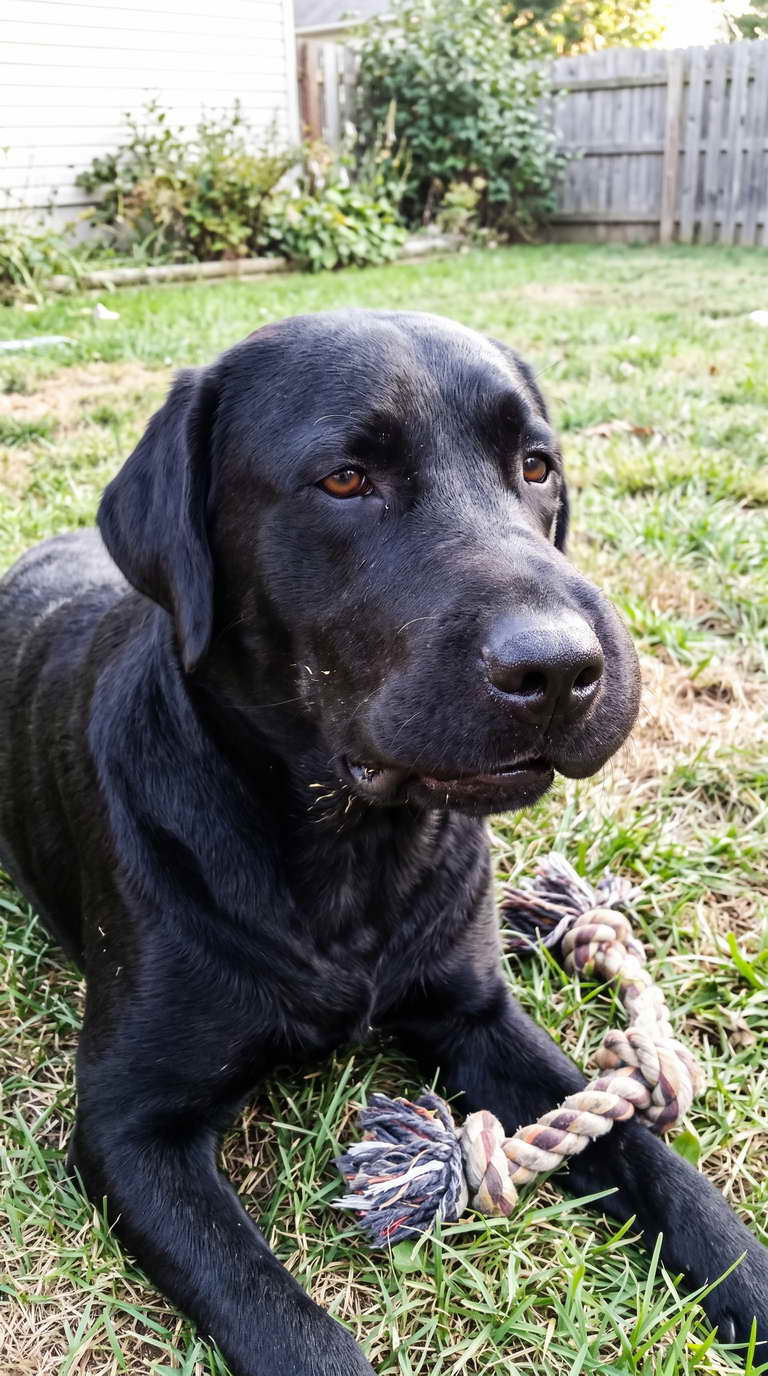
If you share your home with a Labrador Retriever, you already know that they explore the world entirely with their mouths. My 2-year-old Black Lab, Koffie, is no exception. Whether it is a rogue tennis ball, a stray stick, or a floating leaf, his first instinct is to try and eat it.
Last Tuesday afternoon, while we were enjoying a quiet hour in the backyard, Koffie decided to snap at what the dog community affectionately calls a “spicy sky raisin”—a very agitated honeybee.
I didn’t see the bee at first. I just heard Koffie let out a sharp, surprised yelp. He immediately dropped his favorite rope toy, started frantically pawing at the right side of his muzzle, and began rubbing his face aggressively along the grass. Within ten minutes, the right side of his usually handsome, blocky snout had swelled up to the size of a softball.
Watching your dog’s face balloon before your eyes is incredibly scary. When a dog stung by bee venom reacts, the swelling happens incredibly fast. As a pet parent, your mind immediately rushes to the worst-case scenario: Is his throat closing? Do I need to rush to the emergency vet right this second?
Thankfully, because of my background in canine care and a few deep breaths, I knew exactly what to look for and how to handle it. Koffie was fine after a few hours of TLC, but the experience was a stark reminder of how quickly backyard playtime can turn into a first-aid situation.
If your dog was just stung by a bee and you are currently panicking in your kitchen, take a deep breath. Here is exactly what I did for Koffie, how to safely remove the stinger, and how to tell if you are dealing with a mild reaction or a true veterinary emergency.
Author’s Medical Disclaimer:
I am a passionate dog advocate and experienced pet parent, but I am not a licensed veterinarian. The first-aid steps and Benadryl dosages shared below are based on my personal experience with Koffie and established guidelines from the American Veterinary Medical Association (AVMA). If your dog is struggling to breathe, vomiting, or showing signs of shock, stop reading and drive to your nearest emergency vet clinic immediately.

Step 1: Assessing the Threat (Is it an Emergency?)
The very first thing I did when Koffie started pawing at his face wasn’t running for the medicine cabinet—it was checking his breathing.
Just like humans, dogs can be highly allergic to bee venom. While Koffie only had a localized reaction (swelling isolated to where he was stung on the cheek), some dogs will experience anaphylaxis, a life-threatening systemic allergic reaction.
Before you do anything else, check your dog for these Emergency Red Flags:
-
Breathing Difficulty: Are they wheezing, gasping, or stretching their neck out to pull in air?
-
Gum Color: Lift their lip. Healthy gums should be salmon pink. If they are pale white, grayish, or blue, your dog is entering systemic shock.
-
Vomiting or Diarrhea: A dog stung by a bee that suddenly starts vomiting is experiencing a severe internal reaction, not an upset stomach.
-
Full-Body Hives: Are welts popping up all over their body, not just where they were stung?
If your dog shows any of those red flags—or if you know they swallowed the bee and were stung inside the throat—go to the emergency vet immediately. Throat swelling can close a dog’s airway in a matter of minutes.
Since Koffie was breathing perfectly fine, acting alert, and just looked like a lopsided cartoon character, I knew we had time to treat him at home.
Step 2: The “Credit Card” Stinger Extraction
If your dog was stung by a honeybee, the bee likely left its stinger and a pulsing venom sac attached to your dog’s skin. (Wasps and hornets keep their stingers and can sting multiple times, but honeybees leave theirs behind).
My first instinct was to reach out and pull the stinger out with my fingernails. Do not do this.
Grabbing a stinger with your fingers or a pair of tweezers squeezes the attached venom sac. It acts exactly like an eyedropper, pumping whatever venom is left directly into your dog’s bloodstream.
Here is the safe way to do it:
-
I grabbed my driver’s license from my wallet (any stiff plastic card like a credit card works perfectly).
-
I had my partner hold Koffie’s collar steady and distracted him with a dollop of peanut butter.
-
I pressed the edge of the card flat against Koffie’s swollen cheek, right next to the tiny black stinger.
-
With a firm, quick sweeping motion, I scraped the card across his fur.
The stinger and the intact venom sac popped right out without injecting any more venom into his face.
Step 3: The Cold Compress Battle
Bee venom causes local inflammation, which brings heat, pain, and blood flow to the area. Cooling the tissue constricts the blood vessels, slowing the spread of the venom and numbing the sharp burning sensation.
Trying to hold an ice pack to the face of a highly energetic, 75-pound Black Lab is exactly as difficult as it sounds. Koffie hated the ice pack.
My trick: I took a clean washcloth, ran it under cold water, and wrapped it around a bag of frozen peas. I smeared a little bit of dog-safe peanut butter on a silicone lick mat and stuck it to the kitchen fridge. While Koffie was busy licking the mat, I was able to gently press the cold compress against his swollen cheek for about 10 minutes.
If your dog won’t tolerate a compress for 10 minutes, try doing it in two-minute intervals. Even a little bit of cold therapy makes a massive difference in stopping the swelling.
Step 4: The Benadryl Protocol (Veterinary Approved)
Because Koffie’s face was still quite puffy and he was clearly itchy, I moved to the next step: an over-the-counter antihistamine.
According to veterinary pharmacology guidelines, plain Diphenhydramine (the active ingredient in standard Benadryl) is generally safe and highly effective for canine allergic reactions.
However, you must be incredibly careful when opening your medicine cabinet.
-
NEVER use liquid Benadryl or children’s syrups, as many contain Xylitol (a sweetener that is highly toxic and fatal to dogs).
-
NEVER use combination cold/sinus medications (like Benadryl-D) which contain decongestants like pseudoephedrine.
-
Use only plain, generic Diphenhydramine HCl tablets.
The standard veterinary dosage is 1 mg of Diphenhydramine per 1 pound of body weight.
Koffie is a big, solid Lab weighing exactly 75 pounds. Standard Benadryl tablets are 25 mg each. Doing the math, Koffie needed 75 mg total, which perfectly equaled three (3) of the 25 mg tablets.
I hid the three tablets inside a small piece of low-fat cheese, and he swallowed them without a second thought. Within 45 minutes, the Benadryl kicked in. Not only did the swelling on his muzzle finally stop expanding, but the medication also made him wonderfully drowsy. He curled up on his orthopedic bed and slept off the stress of the afternoon.
(Always call your vet to confirm the exact dosage for your specific dog, especially if they are on other medications or have underlying health conditions like liver or kidney issues).
Step 5: Baking Soda Paste for the Sting
While Koffie was starting to fall asleep, I applied one final home remedy to the exact puncture wound.
Honeybee venom is highly acidic. You can neutralize that painful acidity using a common baking staple. I mixed a tablespoon of baking soda with just enough water to create a thick, white paste, and dabbed it directly onto the spot where the stinger used to be.
Side note: If you actually saw a wasp sting your dog, their venom is alkaline. In that case, you would dab a little apple cider vinegar on the sting instead of baking soda to neutralize it.
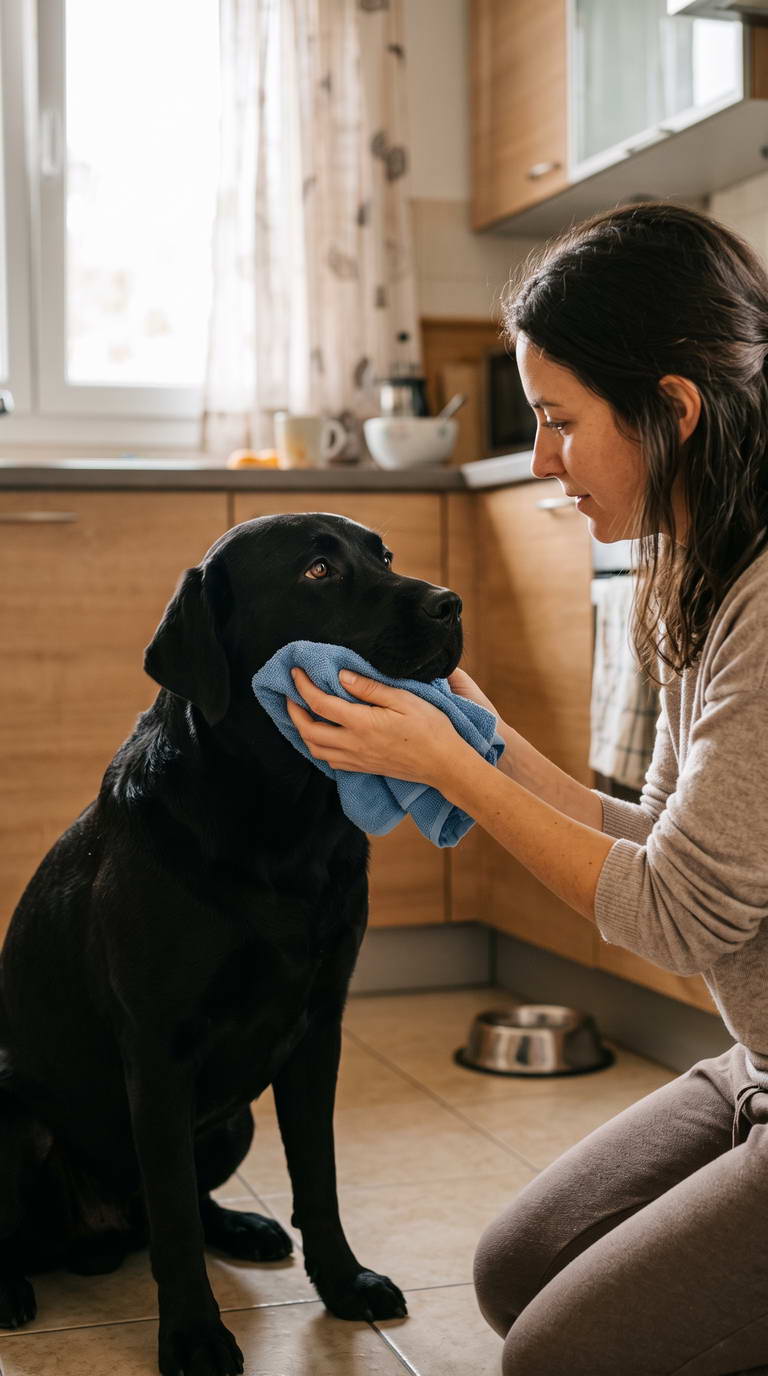
Monitoring the Aftermath
I canceled my afternoon plans and stayed home to monitor Koffie. While most severe anaphylactic reactions happen within the first 20 minutes, some dogs can experience a delayed biphasic reaction hours later.
By dinnertime, the swelling on Koffie’s muzzle had reduced by half. By the next morning, he was completely back to his normal, goofy self, looking for his rope toy in the exact same bushes where he got stung. (Clearly, Labs are not known for holding grudges).
What I Learned (And What You Should Keep on Hand)
This experience taught me that emergencies do not wait for you to be prepared. Since the incident with Koffie, I have upgraded our house and our hiking backpacks. I now carry a small waterproof container with:
-
A dedicated old plastic gift card (for scraping stingers).
-
A blister pack of plain 25mg Diphenhydramine tablets.
-
A small tube of dog-safe saline wash.
Seeing your dog in pain is one of the hardest parts of being a pet parent. But knowing the difference between a harmless puffy snout and a true airway emergency gives you the confidence to act quickly.
If your dog is currently sporting a swollen, lopsided face from a bee sting, I feel your stress. Get the stinger out with a card, grab the ice pack, calculate your Benadryl dose safely, and give them plenty of cuddles. They will be back to chasing butterflies (hopefully without eating them) in no time.
About The Author

Leave a Reply