
English Cocker Spaniel vs American Cocker Spaniel Differences: The Complete Guide

PETSIDI – To the casual observer passing through a local dog park, a Cocker Spaniel is simply a Cocker Spaniel: a medium-sized sporting dog with pendulous floppy ears, warm expressive eyes, and a silky, feathering coat.
However, ask a dedicated spaniel enthusiast or an AKC conformation judge, and they will quickly inform you that you are looking at two entirely distinct breeds separated by an ocean, specialized breeding philosophies, and distinct functional purposes.
The divergence between the English Cocker Spaniel and the American Cocker Spaniel is one of the most fascinating chapters in canine history. While they share a common ancestral tree rooting back to nineteenth-century British woodcock hunters, selective breeding over the last century has carved them into two dogs with noticeably different physical silhouettes, facial structures, exercise demands, and grooming commitments.
Are you trying to decide which spaniel matches your household? Do you need a field-capable hiking partner with athletic endurance, or a glamorous, compact lap companion that thrives in a suburban living room?
In this comprehensive guide, we break down the definitive english cocker spaniel vs american cocker spaniel differences, examining their history, physical markers, head anatomy, temperaments, maintenance demands, and health considerations.
Quick Comparison: English vs. American Cocker Spaniel
Before examining nuanced anatomical differences, review this high-level side-by-side specification chart:
| Characteristic | English Cocker Spaniel | American Cocker Spaniel |
| Primary Country of Origin | United Kingdom | United States |
| Historical Working Purpose | Active upland game hunting & retrieving | Companion & show ring; field hunting (historical) |
| Average Weight | 26 – 34 lbs (Males) / 26 – 32 lbs (Females) | 25 – 30 lbs (Males) / 20 – 25 lbs (Females) |
| Average Shoulder Height | 15 – 17 inches (Taller, square silhouette) | 13.5 – 15.5 inches (Shorter, compact frame) |
| Head & Muzzle Structure | Longer, setter-like muzzle; subtle brow stop | Domed skull; short, chiseled muzzle; deep stop |
| Coat Length & Density | Moderate, functional feathering | Profuse, floor-length, luxurious coat |
| Grooming Commitment | Moderate (Brushing 2–3 times weekly) | Extremely High (Daily brushing / frequent clipping) |
| Energy & Drive | High working stamina; field-oriented | Moderate energy; companion-oriented |
| Average Lifespan | 12 – 14 Years | 10 – 14 Years |
The Historical Divide: How One Breed Became Two
To understand why these two dogs look and act differently today, you have to travel back to the late 19th and early 20th centuries.
Originally, both varieties were classified together simply as “Cocker Spaniels”—named for their unmatched ability to flush and retrieve the elusive Eurasian woodcock from dense briars and marshes. In the late 1870s, British spaniels were imported to the United States.
                  ┌───────────────────────────────────────────────┐
                  │          The Historical Spaniel Split         │
                  └───────────────────────┬───────────────────────┘
                                          │
         ┌────────────────────────────────┴────────────────────────────────┐
         ▼                                                                 ▼
┌─────────────────────────────────┐               ┌─────────────────────────────────┐
│     English Cocker Lineage      │               │     American Cocker Lineage     │
│ • Preserved athletic silhouette │               │ • Bred for domestic companion   │
│ • Longer nose for scent trials  │               │ • Domed skull & shorter snout   │
│ • Practical field coat          │               │ • Dramatic floor-length coat    │
│ • Recognized: The Kennel Club UK│               │ • Formally split by AKC in 1946 │
└─────────────────────────────────┘               └─────────────────────────────────┘
Once in America, breeders began favoring a different aesthetic. American hunters pursued the American woodcock, a smaller bird than its European cousin, meaning a slightly smaller dog was advantageous.
More significantly, American breeders leaned heavily toward companion and show traits: they bred for smaller frames, rounder heads, larger dramatic eyes, and an abundantly thick, flowing coat.
By the 1930s, the differences were so pronounced that spaniel purists took action. In 1936, the English Cocker Spaniel Club of America was formed to preserve the traditional hunting type. Finally, in 1946, the American Kennel Club (AKC) officially recognized the English Cocker Spaniel and the American Cocker Spaniel as two completely distinct, separate breeds.
Interestingly, their naming conventions depend entirely on where you live:
-
In the United States, the American variety is officially called the Cocker Spaniel, while the UK variety is labeled the English Cocker Spaniel.
-
In the United Kingdom and across Europe, governed by The Kennel Club, the British dog is simply the Cocker Spaniel, while the transatlantic version is registered as the American Cocker Spaniel.
Physical Differences: Head Shape, Silhouette, and Coat
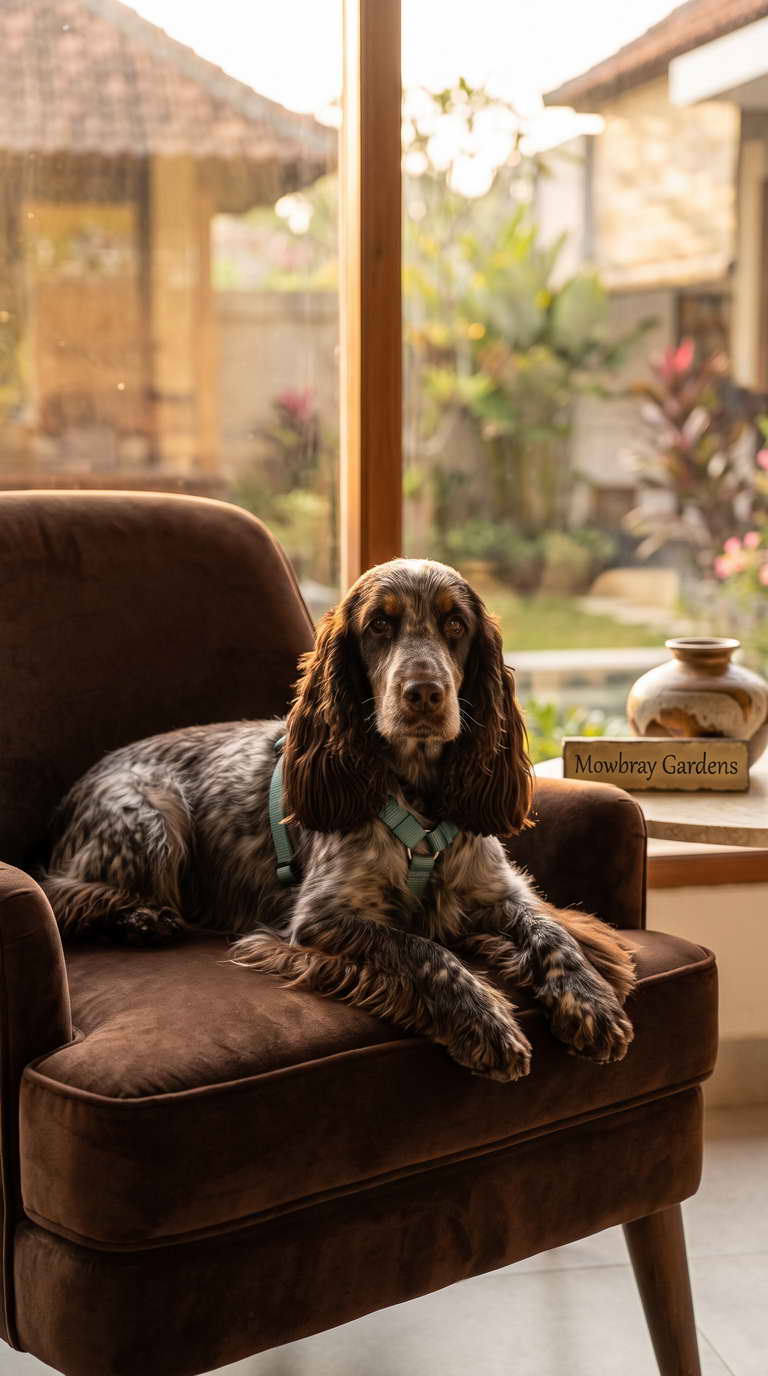
The clearest differences between the two breeds reveal themselves when they stand side by side.
1. Head and Facial Architecture (The Most Telling Clue)
If you want to identify which breed you are looking at within five seconds, examine the head profile:
-
The English Cocker Spaniel: Possesses a longer, narrower, more aristocratic head that closely mirrors a small English Setter. The muzzle is square and roughly equal in length to the skull. The “stop” (the forehead indentation between the eyes) is moderate and gently sloping.
-
The American Cocker Spaniel: Has a pronounced, round, arched dome skull. The muzzle is noticeably shorter, broader, and more deeply chiseled, ending in a dramatic, nearly 90-degree abrupt stop. Their eyes are rounder, fuller, and point forward with a distinct, innocent, doll-like expression.
2. Body Proportions and Overall Silhouette
-
English Cocker: Taller, leaner, and built like a classic athletic field dog. When viewed from the side, their body forms a balanced square. Their backline remains relatively flat and level from the shoulders to the tail set, built for running through rough underbrush.
-
American Cocker: Shorter and more compact. Their topline slopes downward noticeably from prominent withers to a low-set tail. They possess a deeper chest and a slightly shorter back compared to their height.
3. Coat Texture and Feathering
-
English Cocker: Carries a practical, medium-length flat or slightly wavy coat. Feathering is present along the chest, ears, belly, and back of the legs, but it remains functional. It is designed to shed brambles and mud in the field without catching like Velcro.
-
American Cocker: Famous for its glamorous, extravagant show coat. The fur along the body and legs is exceptionally dense, long, and silky, often reaching all the way to the floor in show rings. This coat is breathtakingly beautiful, but it requires extraordinary human maintenance.
Temperament and Household Energy: Hunters vs. Companions
While both breeds are universally beloved for their gentle, merry, and affectionate nature, their functional drives create distinct everyday personalities.
The English Cocker Spaniel: Driven, Inquisitive, and Tireless
The English Cocker retains a strong working mindset. They are inquisitive explorers who explore the world nose-first.
-
High Kinetic Stamina: They need regular, active physical exercise. A simple walk around the block will leave an English Cocker restless. They thrive on long hikes, active retrieve games, and canine agility courses.
-
Engaged and Focused: They are deeply eager to please, responsive to directional training, and maintain high mental alertness.
-
Best Suited For: Active outdoor families, hikers, runners, and households looking for an athletic dog capable of keeping up with weekend adventures.
The American Cocker Spaniel: Gentle, Devoted, and Sweet-Tempered
The American Cocker is primarily a companion dog at heart. While they still enjoy outdoor play, their energy curve is much calmer.
-
Lap-Oriented Affection: American Cockers form intensely affectionate bonds and love snuggling against their family members on the couch.
-
Gentle Sensitivity: They are emotionally soft dogs that respond poorly to raised voices or rough handling. Positive reinforcement and calm reassurance bring out their brightest qualities.
-
Family Harmony: Their cheerful, adaptable nature is one reason spaniel lineages frequently influence modern companion crosses and appear across the top 10 most popular dog breeds in the USA for family homes.
-
Best Suited For: Suburban homes, retirees, families with gentle children, and urban apartment dwellers who can commit to rigorous grooming schedules.
Grooming Realities: A Massive Commitment Gap
Grooming is often the deciding factor for prospective owners comparing these two spaniels. The maintenance required for an American Cocker Spaniel is substantially higher than that of an English Cocker.
       ┌─────────────────────────────────────────────────────────┐
       │             Weekly Grooming Time Investment             │
       └────────────────────────────┬────────────────────────────┘
                                    │
          ┌─────────────────────────┴─────────────────────────┐
          ▼                                                   ▼
┌─────────────────────────────────┐ ┌─────────────────────────────────┐
│     English Cocker Spaniel      │ │     American Cocker Spaniel     │
│ • Brush 2 to 3 times per week   │ │ • Daily line brushing required  │
│ • Trim paw pads & ears monthly  │ │ • Professional clip every 6 wks │
│ • Wipe ears after muddy hikes   │ │ • High matting & debris risk    │
│ • Annual Grooming: $300 - $500  │ │ • Annual Grooming: $700 - $1200 │
└─────────────────────────────────┘ └─────────────────────────────────┘
Grooming the English Cocker Spaniel
Their coat is manageable for most pet parents. A thorough brushing session two or three times a week with a slicker brush and a steel comb easily removes loose undercoat and prevents mats from forming in their leg feathers. Routine maintenance involves trimming excess hair around the paw pads, checking their ears for moisture, and clipping sanitary areas every couple of months.
Grooming the American Cocker Spaniel
Keeping an American Cocker in full coat is a near-daily commitment.
-
Matting Susceptibility: Their fine, dense coat mats rapidly if skipped for even two or three days, especially in high-friction friction zones (behind ears, armpits, and groin).
-
Professional Grooming Bills: Unless you learn to clip your dog at home with professional shears, expect to visit a professional grooming salon every four to six weeks. Over a year, this adds an extra $700 to $1,200 to ownership costs.
-
The “Puppy Cut” Alternative: Many pet owners choose to clip their American Cocker’s coat short all over into a manageable “puppy cut” to cut down brushing time while maintaining their adorable facial appearance.
Health and Longevity: Breed-Specific Vulnerabilities

Both spaniels are generally sturdy dogs with life expectancies reaching well into the 12 to 14-year range. However, their physical differences produce distinct health profiles:
Because both breeds possess long, heavy, pendulous ears that seal off the ear canal, air circulation is restricted. Moisture and ear wax build up quickly, making both breeds highly prone to chronic bacterial and fungal ear infections (otitis externa). Weekly ear inspections and drying cleansers are mandatory.
English Cocker Spaniel Health Concerns
-
Adult-Onset Neuropathy (AON): A progressive neurological disorder affecting motor function in older dogs; responsible breeders use DNA screening to prevent breeding affected lines.
-
Familial Nephropathy (FN): A fatal, early-onset kidney disease for which clear genetic screening markers now exist.
-
Hip Dysplasia: As active sporting canines, hip clearances through the Orthopedic Foundation for Animals (OFA) are strongly recommended.
American Cocker Spaniel Health Concerns
-
Ophthalmological Conditions: Their round, prominent eyes make them susceptible to cataracts, glaucoma, Progressive Retinal Atrophy (PRA), and dry eye (keratoconjunctivitis sicca).
-
Skin Allergies and Sebaceous Cysts: Their dense, oil-producing coat makes them prone to atopic dermatitis, skin allergies, and sebaceous gland cysts.
-
Heart Disease: Dilated Cardiomyopathy (DCM) and congestive mitral valve problems require regular veterinary auscultation.
Before bringing any puppy home, always verify that the breeder provides certified OFA hip, patella, and eye clearances, along with DNA panels for parent dogs.
Early Puppyhood: Training and Developmental Differences
Bringing home a spaniel puppy of either variety means preparing for typical puppy antics. Because both breeds possess high oral exploration instincts, new owners must establish boundaries early.
It is very common for young, excited spaniel puppies to nip at pant legs and shoes during morning routines, making it essential to master how to stop puppy biting feet when walking using positive redirection and quiet body freezes rather than shouting or physical struggle.
-
Training the English Cocker Puppy: Needs early impulse control exercises. If they catch scent of a rabbit in the yard, their hunting brain turns on. Consistent recall training (“Come!”) and retrieve redirection keep their natural working drive structured.
-
Training the American Cocker Puppy: Needs gentle, confidence-building socialization. Harsh verbal reprimands or raised voices can cause a sensitive American Cocker puppy to submissively urinate or shy away. Short, five-minute training games paired with soft treats and gentle praise yield the best results.
Financial Considerations: Budgeting for Your Spaniel
Whether you purchase a puppy from a preservation breeder or pursue an adoption pathway, spaniel ownership involves financial planning.
Prospective owners often budget only for food and initial vaccines while overlooking the true hidden costs of adopting a dog shelter or raising a spaniel puppy, including:
-
Special deep, narrow spaniel bowls (designed to keep long ears out of wet dog food and water).
-
Frequent ear cleaning solutions and prescription antibiotics for ear inflammation.
-
Lifetime grooming appointments (which are significantly higher for American Cockers).
-
Professional positive-reinforcement training classes to channel hunting or prey-chasing instincts.
Which Breed Is Right for You? (Decision Checklist)
Review this simple lifestyle matching guide to determine which spaniel belongs in your home:
Choose an English Cocker Spaniel If:
-
You want an active, sturdy canine partner for weekend hikes, running trails, or field training.
-
You prefer a more natural, athletic dog silhouette with functional, manageable feathering.
-
You enjoy an engaged, working-dog personality that loves having a task to accomplish.
-
You have a securely fenced yard and time for 60+ minutes of daily physical exercise.
Choose an American Cocker Spaniel If:
-
You want a compact, ultra-affectionate companion that loves curling up on your lap for hours.
-
You are captivated by the glamorous, classic look of an abundant, silky coat.
-
You are fully prepared to commit time or money to extensive, ongoing coat grooming.
-
You live in an apartment, condominium, or quiet suburban neighborhood with moderate walking habits.
Frequently Asked Questions (FAQ)
Are English and American Cocker Spaniels the same breed?
No. While they share common ancestral heritage up to the early 1900s, the American Kennel Club (AKC) officially divided them into two separate and distinct purebred breeds in 1946. They have distinct breed standards, physical structures, and genetic health profiles.
Which Cocker Spaniel sheds more?
Both breeds shed moderate amounts of fine hair year-round. However, because the American Cocker Spaniel possesses significantly more coat density and volume, their shed hair tends to form noticeable dust-bunnies and mats if not brushed daily.
Is the English Cocker Spaniel bigger than the American Cocker Spaniel?
Yes. The English Cocker Spaniel stands roughly one to two inches taller at the shoulder and weighs on average 5 to 8 pounds heavier than the American Cocker Spaniel, presenting a longer, more athletic and square frame.
Can both breeds live comfortably in apartments?
Yes, provided their individual exercise needs are satisfied. The American Cocker Spaniel adapts slightly more naturally to compact apartment living due to its lower exercise demands and smaller size. An English Cocker can thrive in an apartment only if their handler provides rigorous, dedicated outdoor cardio sessions daily.
Final Thoughts
The debate between the English Cocker Spaniel vs American Cocker Spaniel does not produce a single winner; rather, it highlights two distinct celebrations of canine development.
If your heart longs for an energetic, noble field athlete with a classic setter-like muzzle and boundless trail endurance, the English Cocker Spaniel will be your steadfast explorer.
If you dream of a compact, gentle-spirited cuddle companion with soulful round eyes and breathtaking glamour, the American Cocker Spaniel will gladly claim its throne on your living room sofa.
Whichever branch of the spaniel family tree you welcome into your life, you are guaranteed a loyal, devoted, and merry companion for years to come.
About The Author

Leave a Reply